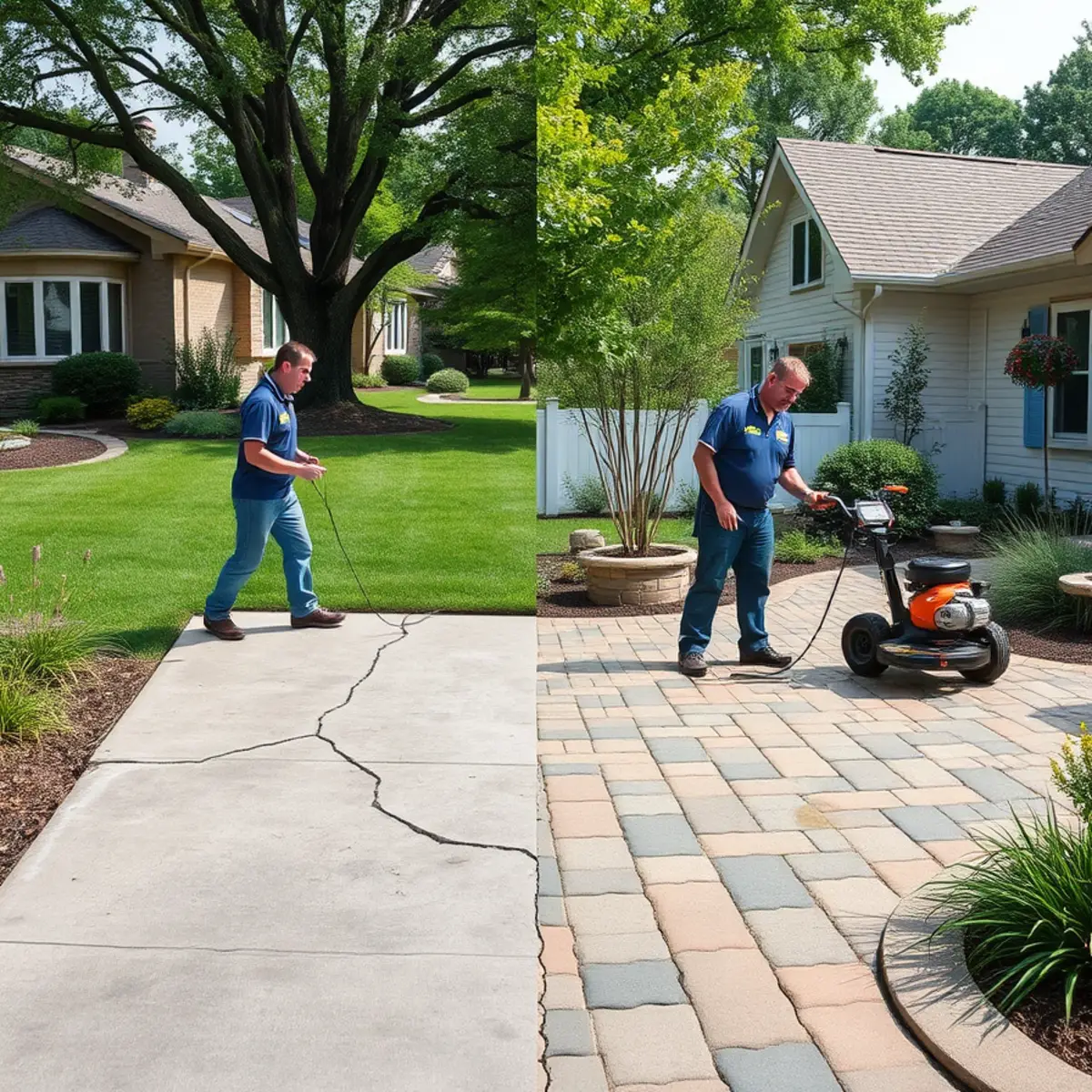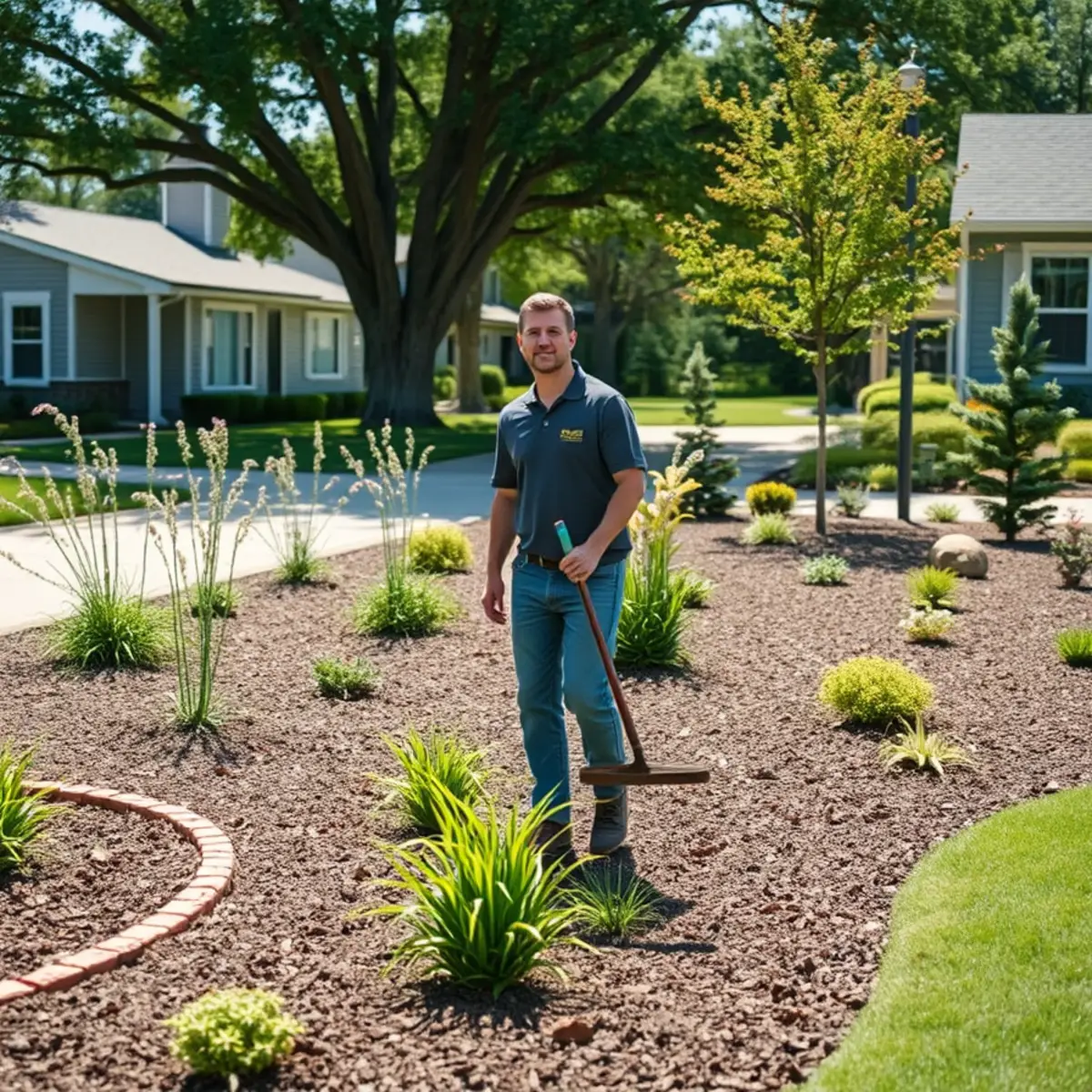
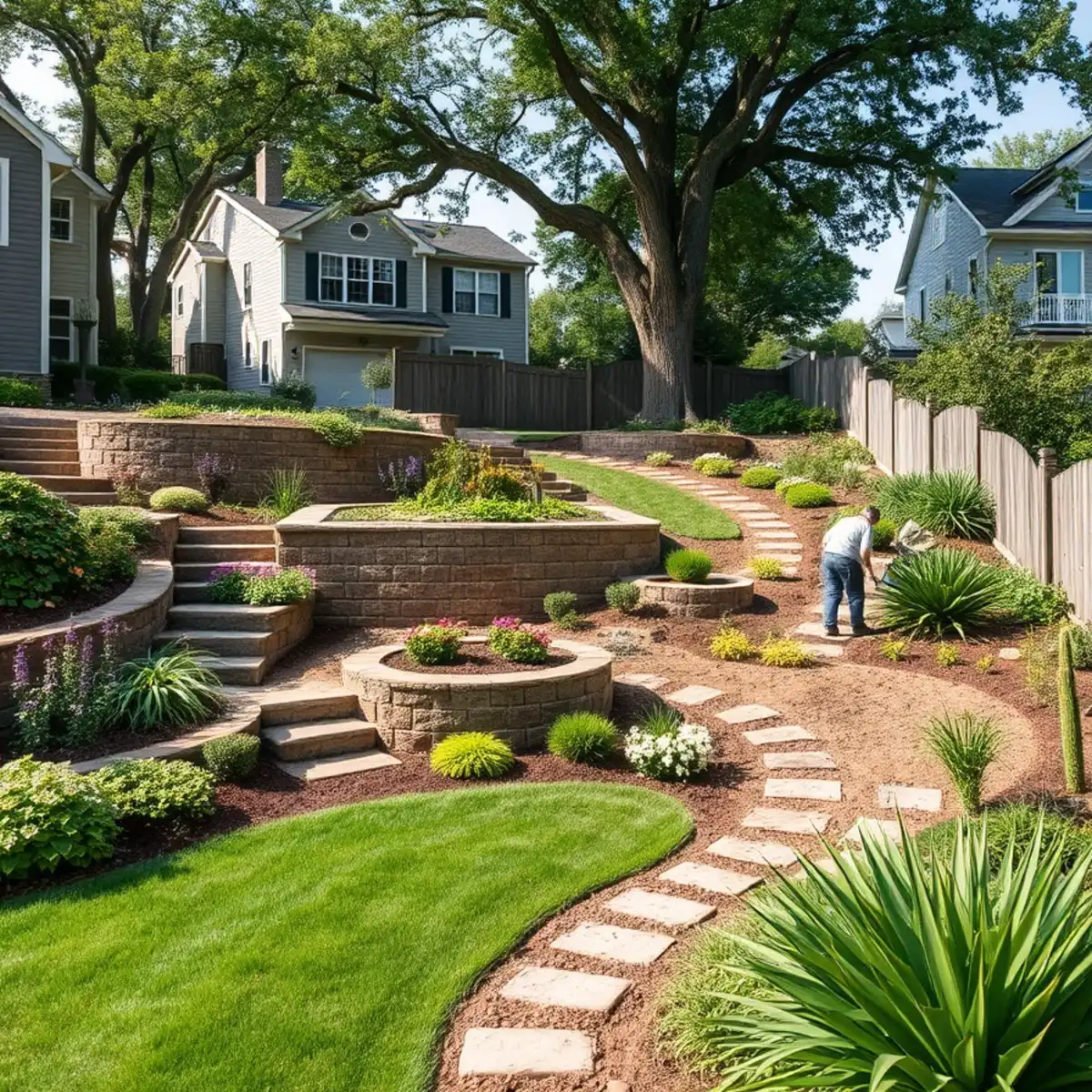
A sloped yard is a mixed blessing. It can look great, but a steep grade sheds water toward the house, erodes bare soil, and leaves you with space you cannot really use. Two approaches fix it: build a retaining wall to hold the grade, or regrade the ground to reshape the slope itself.
They solve the same problem in different ways, and picking the right one — or the right combination — depends on how steep the slope is, how much room you have, and what you want the space to do. Choose wrong and you overspend or under-solve.
We work sloped lots across the Fox Valley all the time. Here is how to read your slope and decide which fix fits, laid out honestly with the tradeoffs.
Key Takeaways
- Regrading reshapes a gentle slope; a retaining wall holds back a steep one.
- Regrading needs room to spread the grade; walls create flat, usable terraces where space is tight.
- Both must control erosion and drainage — the slope that troubles you is usually also shedding water.
- On many Fox Valley lots the best answer combines the two.
First, Read the Slope
Before choosing a fix, understand what the slope is doing. How steep is it? Which way does water run across it, and is it heading toward the house? Is the soil bare and eroding, or held by turf? And what do you actually want from that ground — a flat lawn, a patio, a planted bank you never walk on?
Those answers point you toward the right approach. A gentle grade with room around it is a different problem than a steep drop in a tight side yard. Getting this read right is where a proper landscape design starts, because the fix has to match both the slope and the goal.
When Regrading Makes Sense
Regrading means reshaping the land — cutting soil from the high side, filling the low side, and resloping to a gentler, more usable pitch that directs water where you want it. It shines on moderate slopes where you have space to spread the grade out.
It is often the right first move when the real issue is water running the wrong way, since regrading fixes the cause by pitching the ground away from the house toward a safe outlet. It can create gently usable lawn without the look of a wall, and it frequently costs less than extensive walls on the right site. Regrading also pairs naturally with drainage solutions — the reshaped grade is the backbone of how the whole yard sheds water.
When a Retaining Wall Makes Sense
A retaining wall holds soil in place at a steeper angle than it would naturally hold, letting you carve a flat, usable area out of a slope. Where regrading needs room to spread, a wall does the opposite — it buys you level ground precisely where space is tight.
A retaining wall is the answer when the slope is steep, when you need a defined flat terrace for a patio or lawn, or when there simply is not room to regrade gently. Taller grade changes often call for terraced walls — a series of shorter walls stepping up the slope — which look better and manage soil loads more safely than one tall wall. The tradeoff is cost and engineering: walls, especially over about four feet, are structures that must be built with proper base, drainage, and depth below the frost line.
Erosion, Drainage, and Usability Tradeoffs
Both approaches have to answer for water and erosion, because a troublesome slope is almost always also a drainage story.
- Erosion: Bare or steep slopes wash out. Regrading to a gentler pitch with established plantings holds soil; a wall stops it outright at the wall line. Deep-rooted native plantings help either way.
- Drainage: Regrading redirects surface water by design. A wall must include drainage behind it, or trapped water and frost will push it over. Neither can ignore where the water ends up.
- Usability: A wall gives you a crisply flat, defined space — great for a patio. Regrading gives softer, natural contours — better for open lawn and a less built look.
- Cost: On a mild slope with room, regrading is often the more economical fix. On a steep or tight lot, a wall may be the only practical way to get usable space, which changes the math.
Often, the Answer Is Both
The real-world solution is frequently a combination. We might regrade the bulk of a yard to a gentle, usable pitch and add a modest retaining wall to hold one steep section or define a patio terrace. The wall handles the part too steep to regrade; the regrading handles the part where a wall would be overkill.
That blended approach usually gives the best result for the money, because each tool does what it does best. Homeowners in Appleton and De Pere with tricky grades almost always end up somewhere on this spectrum rather than all wall or all regrade. The right mix comes from reading the specific slope, which is exactly what an on-site estimate sorts out — no two sloped yards want quite the same answer.
Want a hand with your project?
The owner offers free, no-obligation estimates across Appleton and the Fox Cities.
Frequently Asked Questions
Often, but not always. On a moderate slope with room to spread the grade, regrading is usually the more economical fix. But on a steep or tight lot where you need flat, usable space, a wall may be the only practical option — and trying to regrade an extreme slope can cost more and work less well than a well-built wall.
Both work when done right. Regrading to a gentler pitch with established plantings holds soil in place, while a retaining wall stops soil movement outright at the wall line. Deep-rooted native plants strengthen either approach. The bigger factor is managing where water goes, since erosion follows uncontrolled runoff.
Only up to a point. Regrading needs room to spread the grade out, so on a steep slope in a tight space there may not be enough room to reach a usable pitch. That's exactly where a retaining wall earns its place — it carves out level ground where regrading can't. Many yards use both.
It comes down to how steep the slope is, how much room surrounds it, where water flows, and what you want the space to do. A gentle grade with space often suits regrading; a steep or tight one usually needs a wall. Many Fox Valley lots want a combination, which an on-site assessment sorts out.
Related Services & Areas

Written by the team at Down To Earth Landscaping, an owner-operated landscaping company serving Appleton and the Fox Cities for over 20 years. We design, build, and maintain outdoor spaces built for Wisconsin's climate.