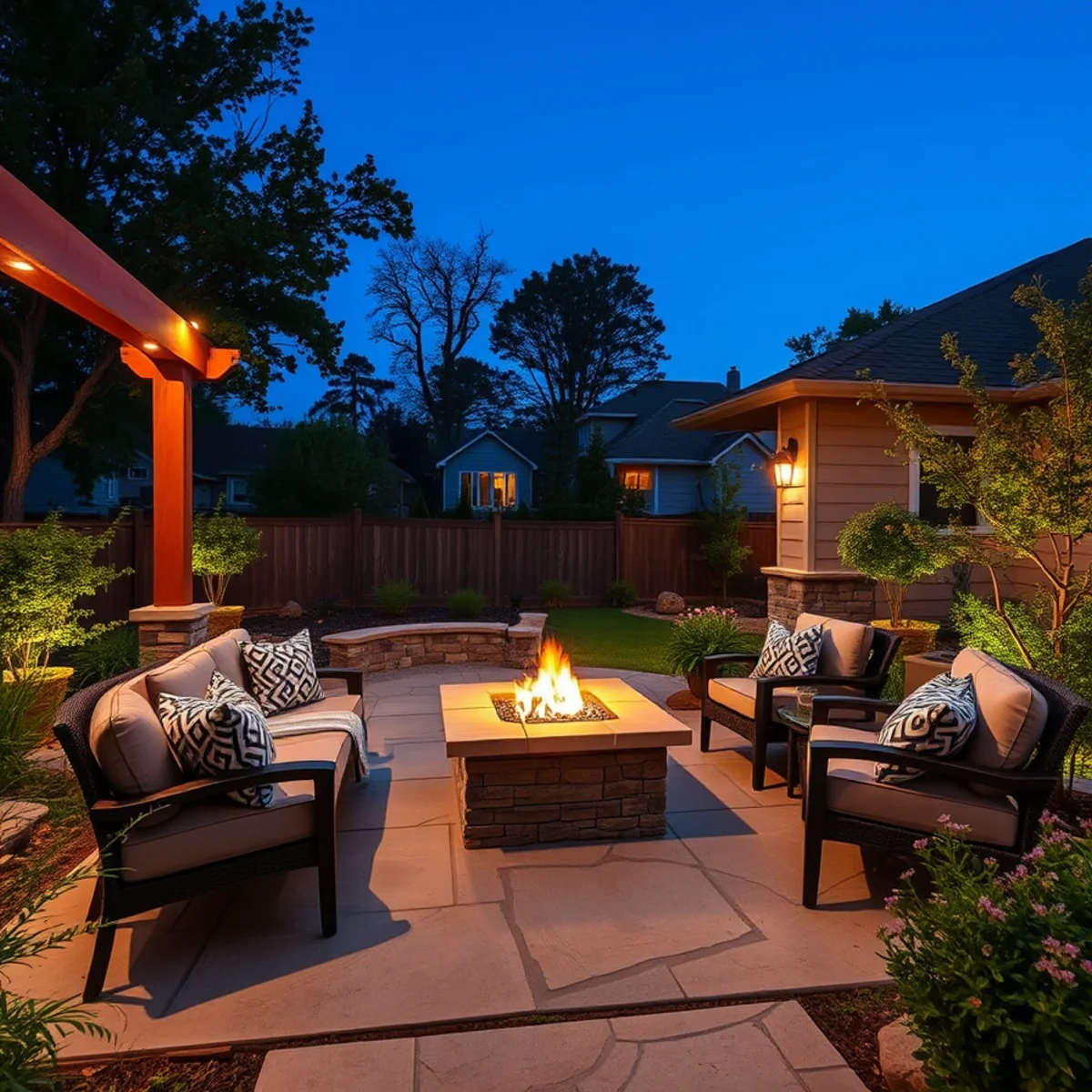
Landscape lighting is the most underrated upgrade a yard can get. Done well, it does three things at once: it makes the house beautiful after dark, it makes walking the property safe, and it quietly improves security. And it does all three on the long winter nights when our yards are dark by late afternoon.
The technology has caught up, too. Low-voltage LED systems sip power, last for years, and give you control over color and brightness that older halogen setups never had. You get more light, more reliably, for less energy.
The difference between lighting that looks magical and lighting that looks like an airport runway is technique. Here are the approaches we use on Appleton homes, and why they work in our climate.
Key Takeaways
- Low-voltage LED is the standard now — energy-efficient, long-lasting, and safe to work around.
- Layer techniques like uplighting, path lighting, and moonlighting instead of lining a walk with evenly spaced fixtures.
- Lighting improves safety on icy walks and steps and adds a real security benefit through long, dark winters.
- Snow reflects and amplifies landscape light, so a good system looks best in the off-season.
Why Low-Voltage LED
Modern landscape lighting runs on a low-voltage system — a transformer steps household current down to 12 volts, which is safer to work around and gentler on wiring than line-voltage setups. Pair that with LED fixtures and the advantages stack up.
LEDs draw a fraction of the power of old halogen bulbs, so you can light an entire property for the cost of running a few household bulbs. They last for years, which matters when a fixture is buried in a planting bed or mounted up a tree. And they hold up to our temperature swings. A quality low-voltage LED landscape lighting system is a genuine long-term value, not just a look.
Techniques That Make the Difference
Great lighting is about placement and restraint, not wattage. These are the core techniques we combine.
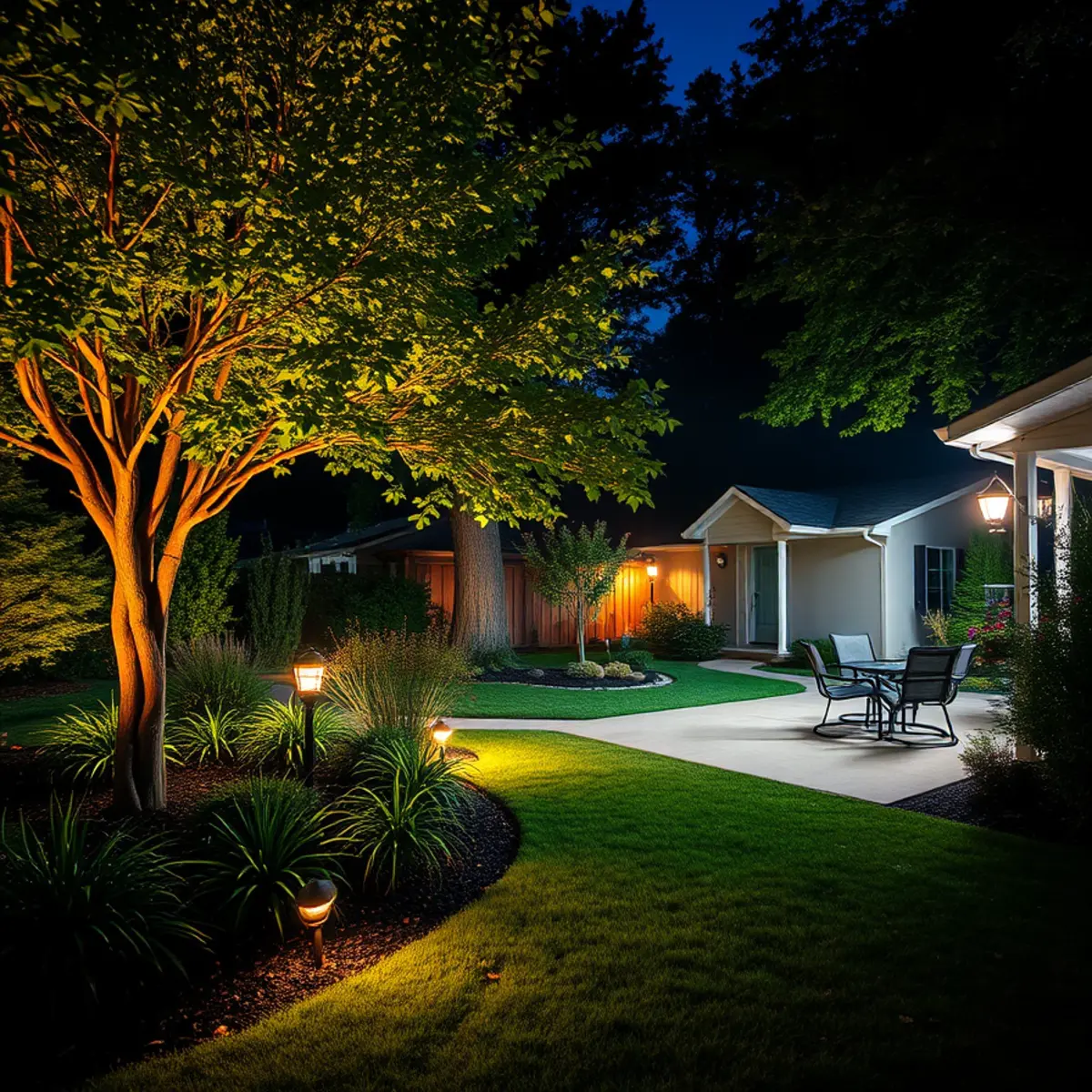
- Uplighting: Fixtures at the base of a tree, wall, or architectural feature throw light upward for drama and depth. The workhorse of a good system.
- Path lighting: Low fixtures that pool light on walkways and steps for safe footing — spaced and staggered, not lined up like a runway.
- Moonlighting: Fixtures mounted high in a tree cast a soft, dappled glow downward, mimicking natural moonlight through the branches. Subtle and beautiful.
- Wash and grazing: A wide, even wash flatters a facade or fence; grazing light raked across stone or textured bark shows off surface detail.
- Silhouetting: Light placed behind a plant against a wall turns it into a striking shadow shape.
Safety and Security Through Dark Winters
Beyond looks, lighting does practical work. Our winters are long and dark, with sunset arriving in the late afternoon for months. Steps, walkways, and grade changes that are obvious in daylight become trip hazards after dark — worse when they are glazed with ice.
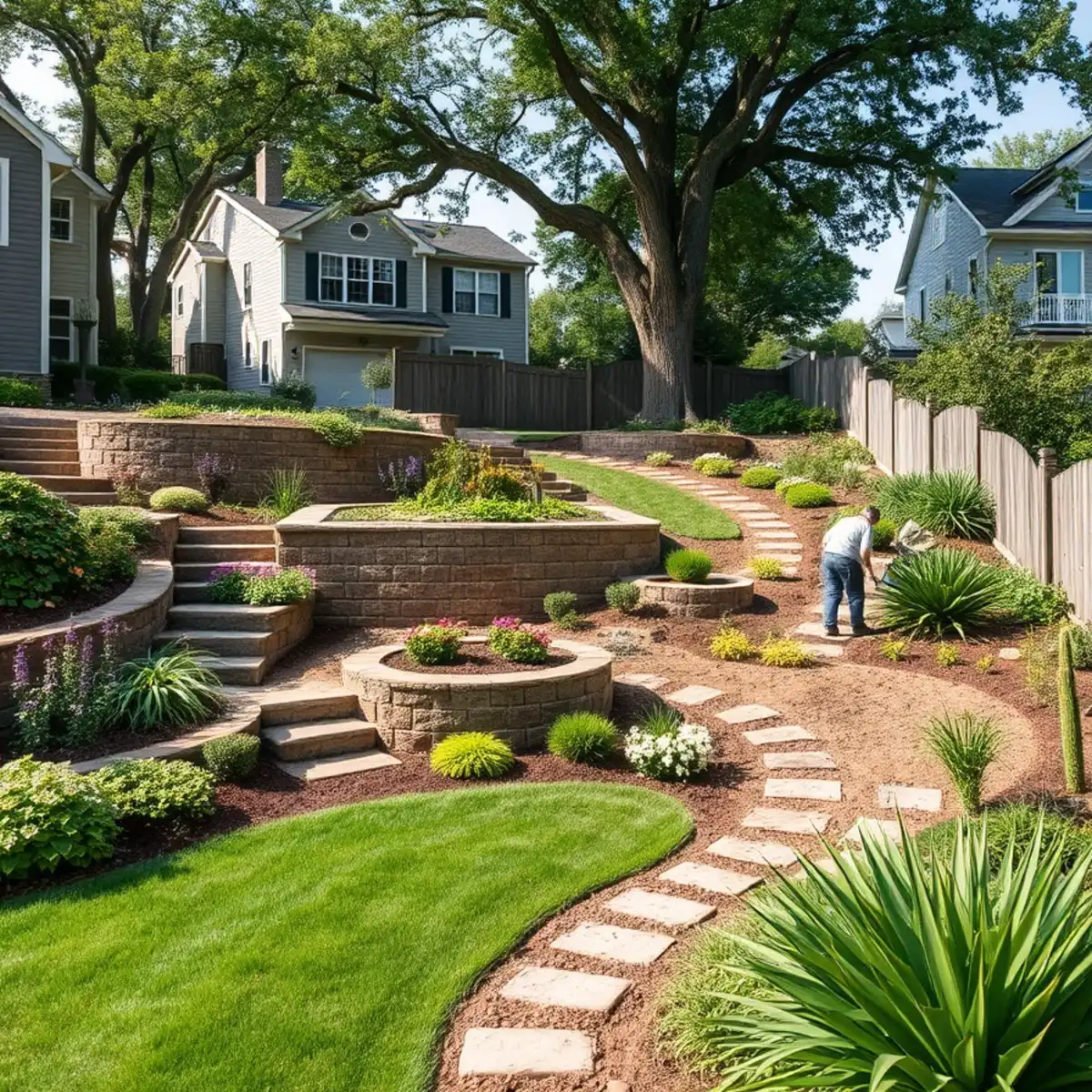
Lighting the paths and stairs you actually use makes coming and going safe all winter. It also deters unwanted visitors: a well-lit property has fewer shadows to hide in, and a home that looks lived-in and cared for is a less appealing target. This is exactly why we plan lighting together with walkways and garden paths — the route and its light belong to the same design.
The Winter Payoff
Here is the part people do not expect: landscape lighting looks its absolute best in winter. Snow is reflective, so it catches and amplifies every fixture, spreading a soft glow across the whole yard. Bare tree branches lit from below become sculptural. A landscape that goes quiet under snow comes alive at night.
Because our outdoor entertaining season is short, a lighting system that pays off year-round earns its place. It extends the usable evenings of your outdoor living space in the warm months and carries the curb appeal straight through the five months of winter, when the rest of the yard is dormant. It is one of the few landscape investments that arguably works hardest in January.
Layering and Zones
The most common mistake is too much even light, which flattens everything and reads as harsh. The fix is layering — combining a few techniques at different heights and brightness so the eye moves through the scene, with pools of light and quiet dark between them. Contrast is what makes it feel designed.
Splitting the system into zones and putting them on timers or smart controls lets you run just the path lights on a weeknight and the full scene when you are entertaining. That flexibility keeps energy use down and the effect intentional. We design lighting layouts for homes across Appleton and Grand Chute around how people actually live in the space — not just how it photographs on the first night.
Want a hand with your project?
The owner offers free, no-obligation estimates across Appleton and the Fox Cities.
Frequently Asked Questions
Yes. Low-voltage LED systems use a fraction of the energy of old halogen setups, last for years so you're not constantly replacing bulbs in hard-to-reach spots, and handle our temperature swings well. The upfront cost is higher than solar stake lights, but the reliability and light quality are in a different league.
Not with LED. The full system typically draws about what a few household bulbs use, because each fixture sips power. Putting zones on timers or smart controls trims it further, so you run only the lights you need on an ordinary night and the full scene when you're entertaining.
It helps. A well-lit property has fewer dark corners to hide in, and a home that looks cared for and lived-in is a less appealing target. Lighting the entries, paths, and steps you use also removes trip hazards during our long, dark, often icy winters, so it's a safety upgrade as much as a security one.
Snow is highly reflective, so it catches and spreads the light from every fixture, giving the whole yard a soft glow. Bare branches lit from below turn sculptural. Since our entertaining season is short, a lighting system that shines through five months of winter is one of the few landscape features that works hardest in the off-season.
Related Services & Areas
Services
Service Areas

Written by the team at Down To Earth Landscaping, an owner-operated landscaping company serving Appleton and the Fox Cities for over 20 years. We design, build, and maintain outdoor spaces built for Wisconsin's climate.