Skip to content
Down To Earth Landscaping logo
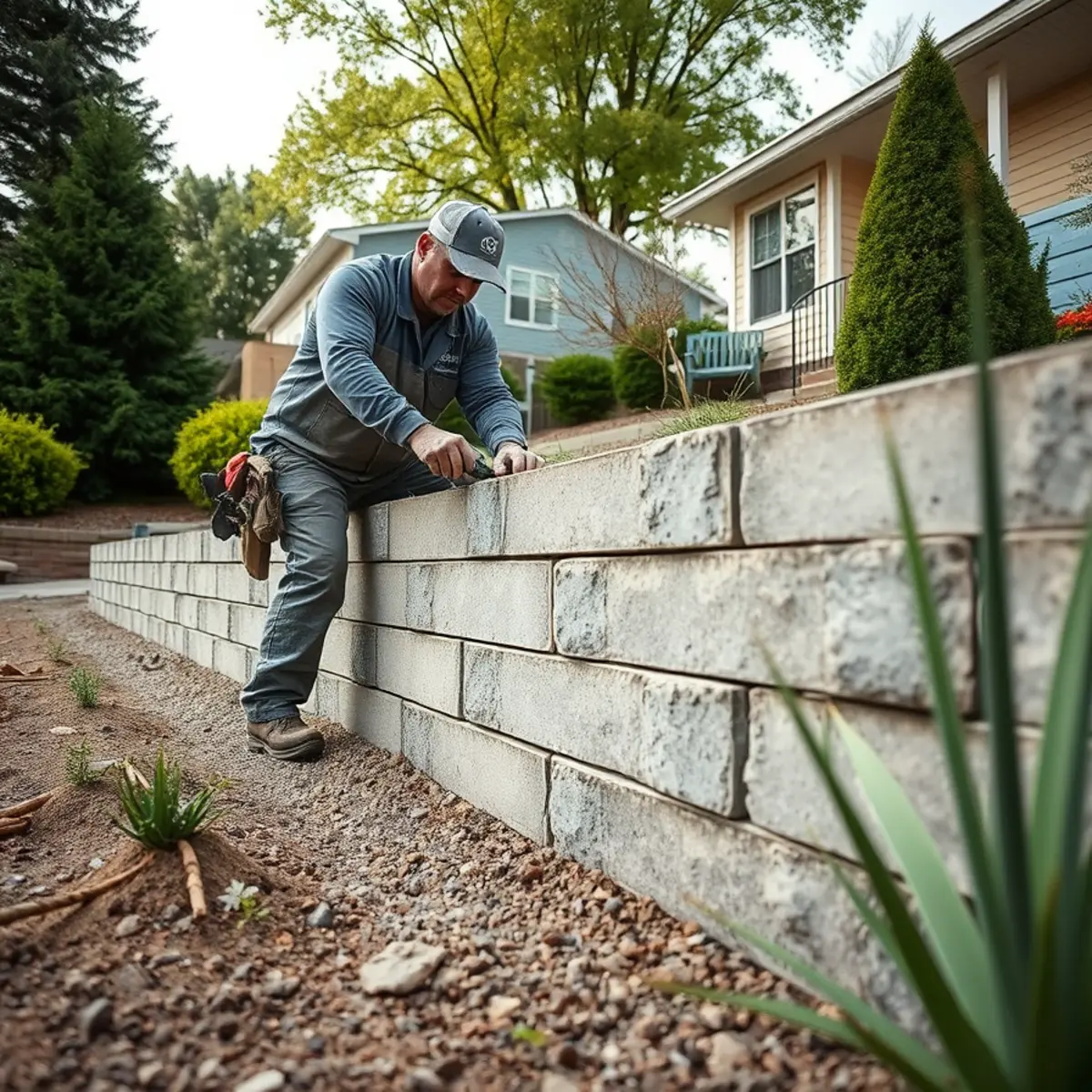
Segmental block retaining wall terracing a sloped Appleton, WI backyard
Hardscaping

Retaining Walls in Appleton, WI

A retaining wall does more than hold back soil — it turns a slope you cannot use into level, usable yard.

  • 20+ YearsIn the Fox Cities
  • 5.0-Star Rated4 Google reviews
  • Owner On-SiteOn every project
  • Licensed & InsuredFully covered
  • Free EstimatesNo obligation

Plenty of Fox Cities lots come with a slope that is more nuisance than feature. Water races down it, mulch washes away, and there is nowhere flat to sit or plant. A well-built retaining wall fixes all of that at once: it terraces the grade into usable levels, stops the erosion, and often becomes the best-looking feature on the property.

The hilly lots in Kaukauna and the bluff properties in Sherwood keep us busy with walls, but almost any yard with a grade problem is a candidate. The key word is well-built. A retaining wall holds back thousands of pounds of wet soil, and it lives or dies on the parts you cannot see.

We have replaced a lot of failed walls over the years — walls that leaned, bulged, and came apart within a few winters because someone skipped the base or the drainage. We build the version that is still straight in twenty years.

Signs You Need a Retaining Wall

Soil is washing onto your patio or lawn

If every hard rain leaves mud and eroded soil at the bottom of a slope, a wall will hold the grade and stop the mess for good.

You have a slope you cannot use

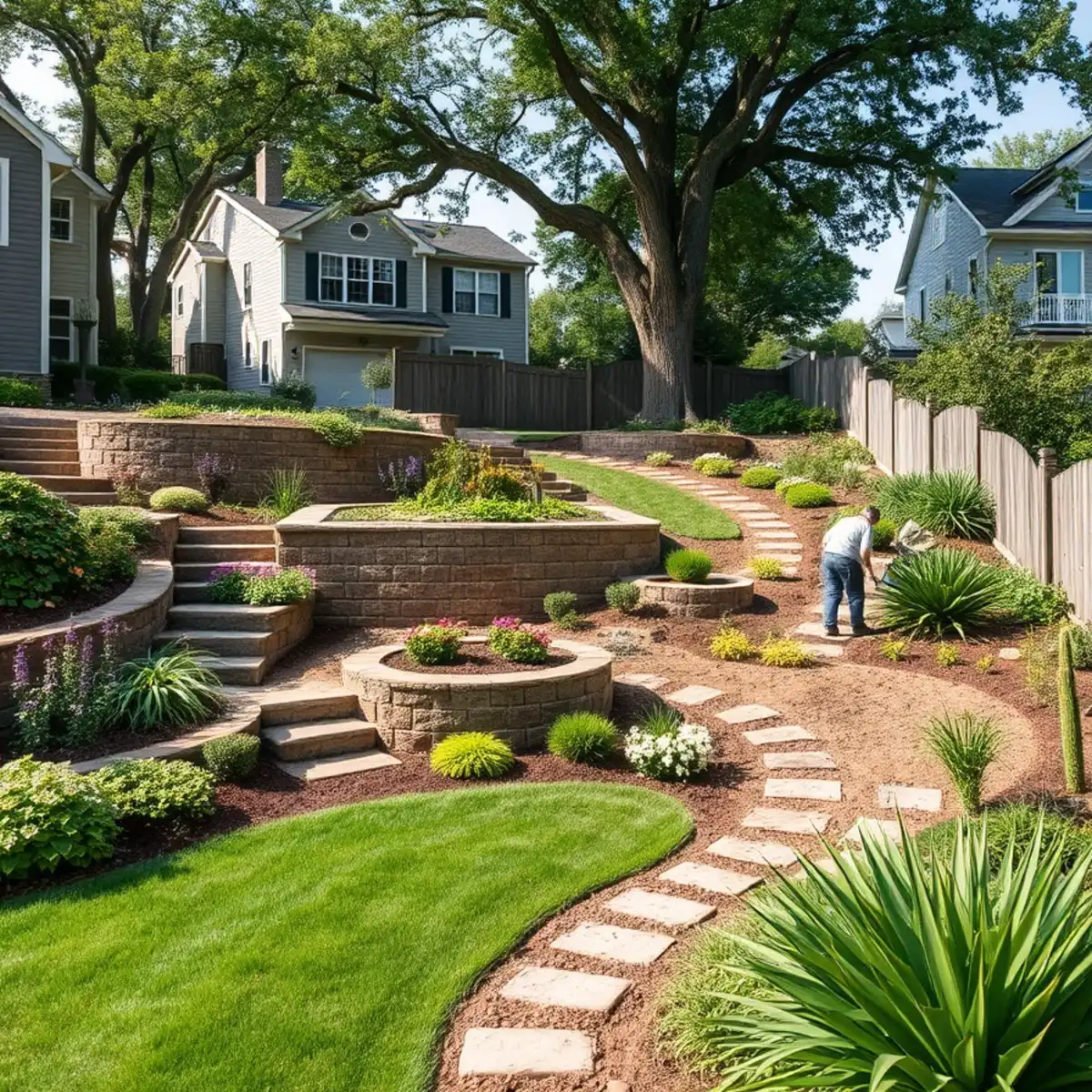
A steep yard is wasted space. Terracing it with walls creates flat, plantable, walkable levels you actually get to enjoy.

An old wall is leaning or bulging

A wall that tilts, bulges, or has separating blocks is failing — usually from bad drainage or a shallow base. It will not fix itself.

Water pools against your foundation

Sometimes the right grade change and a wall are what redirect water away from the house before it causes bigger problems.

How We Build Walls That Hold

  1. 1

    Assessment & Design

    We evaluate the slope, soil, and water flow, then design a wall — height, length, material, and any tiers — sized to the load it must hold.

  2. 2

    Excavation & Deep Base

    We excavate and build a deep, compacted aggregate base. A retaining wall is only as strong as its footing, so this is where we spend the effort.

  3. 3

    Drainage Behind the Wall

    We install drainage stone and a drain tile behind the wall so water has somewhere to go. Trapped water is the number-one reason walls fail here.

  4. 4

    Block or Stone Installation

    We set each course level, backfill and compact in lifts, and add geogrid reinforcement into the soil where the height calls for it.

  5. 5

    Caps, Backfill & Cleanup

    We finish with capstones, final backfill and grading, and a clean site — then walk the completed wall with you.

Drainage and the Base: Why Walls Fail

A retaining wall holds back soil, and soil holds water. After a Fox Cities rain or snowmelt, the ground behind a wall gets saturated and heavy. If that water has nowhere to escape, it builds hydrostatic pressure that pushes the wall out — and when it freezes, it expands and shoves even harder. That is why leaning, bulging walls are so common.

We engineer against it. Every wall gets drainage stone and a perforated drain tile behind it so water drains out the bottom instead of pushing on the wall. The base is dug deep and compacted so the footing does not settle or heave. On taller walls we lay geogrid — layers of reinforcement that tie the wall into the hillside so the whole mass works together.

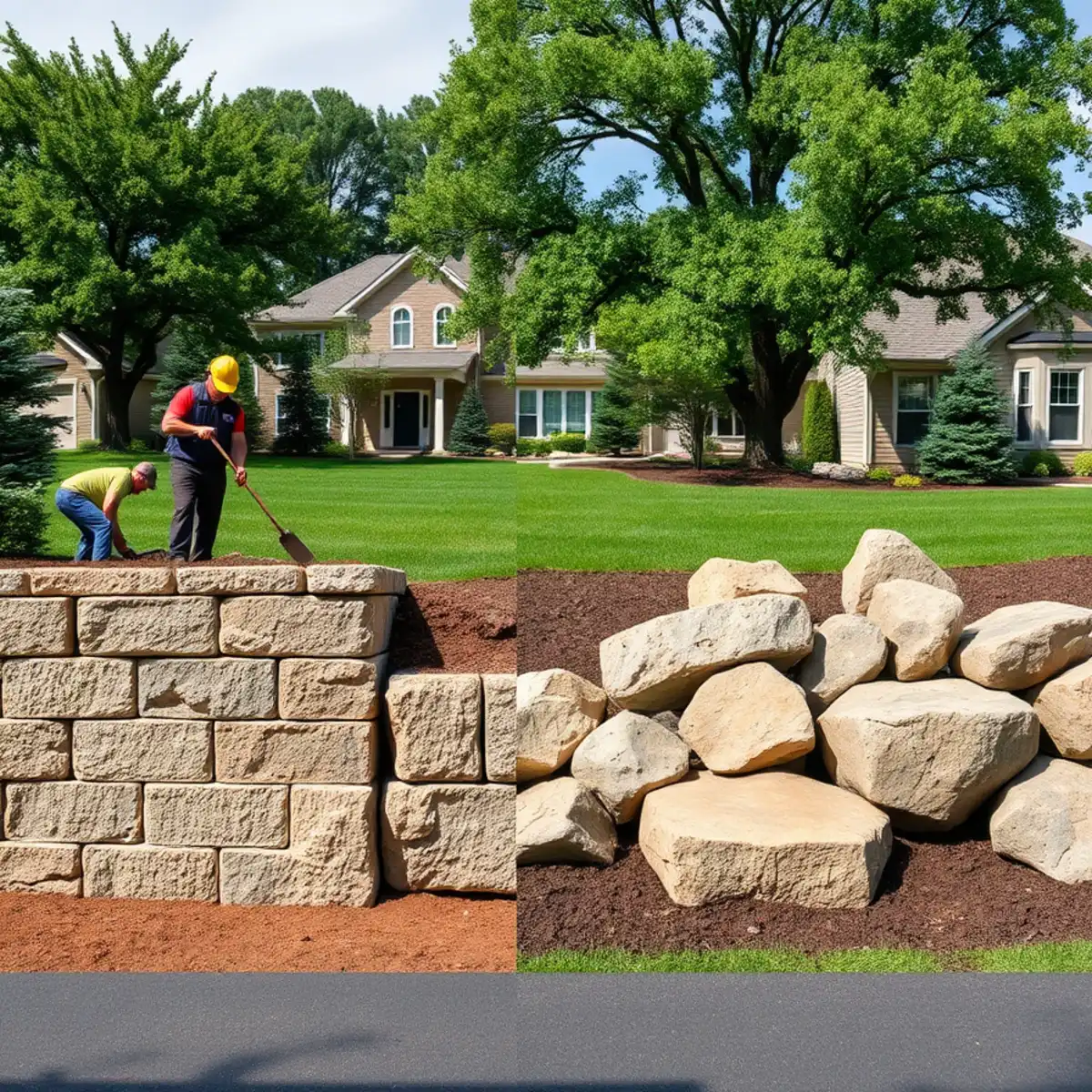
We build in segmental block, natural stone, and boulder, and we will steer you to the right material for the height, look, and budget of your project.

  • Drainage stone and drain tile behind every wall
  • Deep, compacted base so the footing holds
  • Geogrid reinforcement on taller walls
  • Segmental block, natural stone, or boulder options
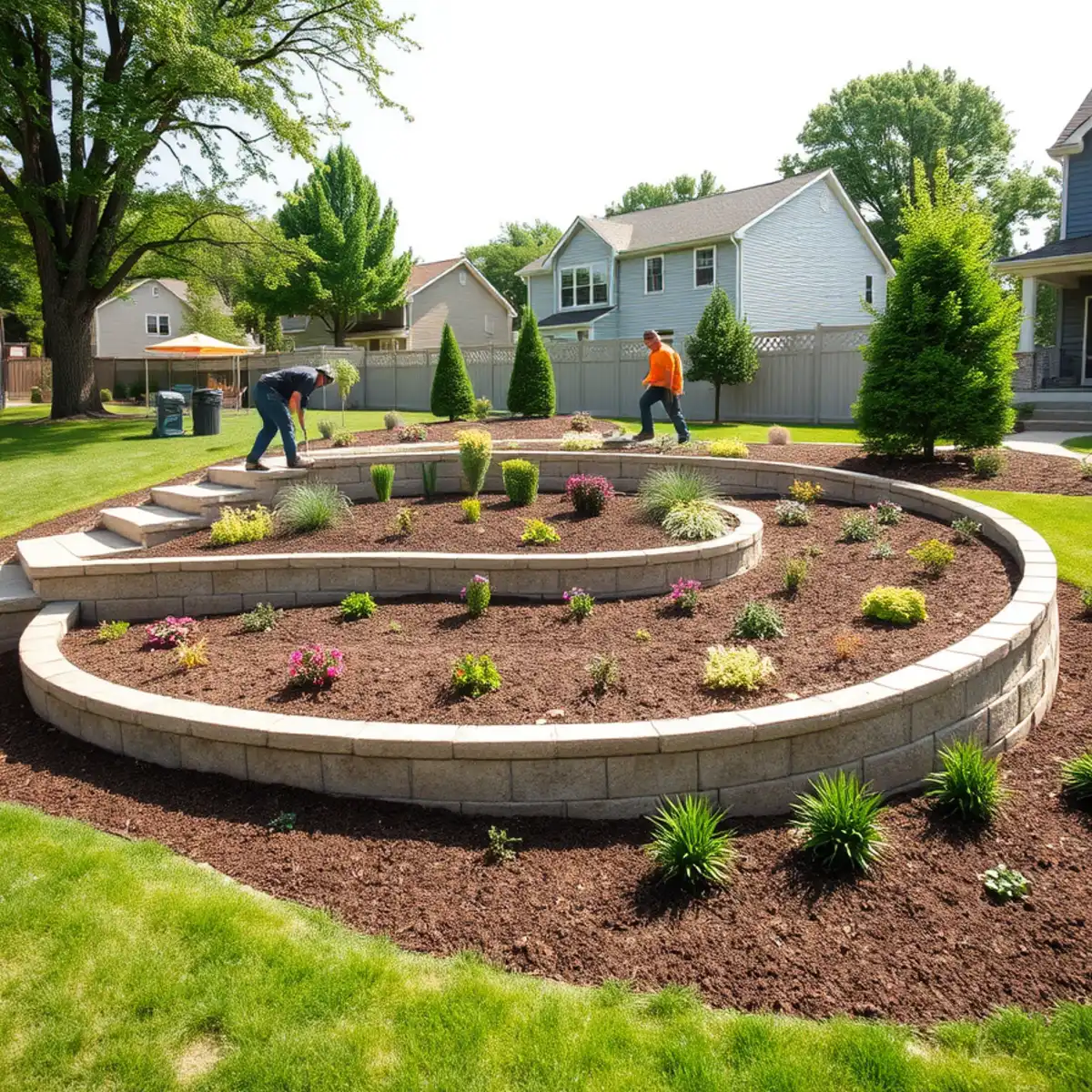
Retaining Walls project underway at an Appleton, WI property

What Affects the Cost of a Retaining Wall

Retaining walls price by what they have to hold and how they are built. A short garden wall and a tall structural wall on a steep lot are different projects entirely.

Height & length

Taller and longer walls hold more load, need more base and reinforcement, and sometimes engineering — all of which affect cost.

Material choice

Segmental block, natural stone, and large boulders each carry different material and labor costs and different looks.

Drainage & reinforcement

Proper drainage stone, drain tile, and geogrid are not optional here — they are built into the price because they are why the wall lasts.

Site access & excavation

Steep, tight, or hard-to-reach sites take more time and equipment to excavate and build.

We assess the slope in person and give you a written, line-item quote — including the drainage work that keeps the wall standing.

Retaining Walls FAQs

Almost always drainage and base. Water builds up behind a wall, freezes, and pushes it out, and a shallow footing lets it settle. We install drainage behind every wall and a deep compacted base so that pressure has somewhere to go.

From the Journal

Learn More

Where We Work

Retaining Walls Across Appleton & the Fox Cities

We provide retaining walls for homeowners throughout the Fox Valley. Find your community for local details:

Ready to Start Your Retaining Walls Project?

Get a free, no-obligation estimate from the owner. Serving Appleton and the Fox Cities for 20+ years.

Owner on every job Licensed & insured Same-day response
Call Now Free Quote