DrainageHow to Fix Standing Water in Fox Cities Clay Soil
Puddles that linger for days after rain or snowmelt are a clay-soil signature in the Fox Cities. Here is how to diagnose the cause and match it to the right fix.
Read article
In the Fox Cities, water is the problem behind most yard problems. Solve the drainage and everything else you build actually lasts.
We address drainage first on almost every project, and for good reason. Our clay-heavy soil drains slowly, and every spring the snowmelt has to go somewhere. Left alone, it pools against foundations, drowns plantings, and undermines patios and walls from below. A beautiful landscape built over a drainage problem is a beautiful landscape with a short life.
The good news is that standing water is almost always fixable. After 20 years in this soil, we know how to read where water wants to go and how to convince it to go somewhere better — away from your house, out of your low spots, and off your hardscape.
Whether it is a soggy lawn near Erb Park, a wet basement wall, or a corner that turns to swamp after every rain, we engineer drainage that works with our soil instead of against it.

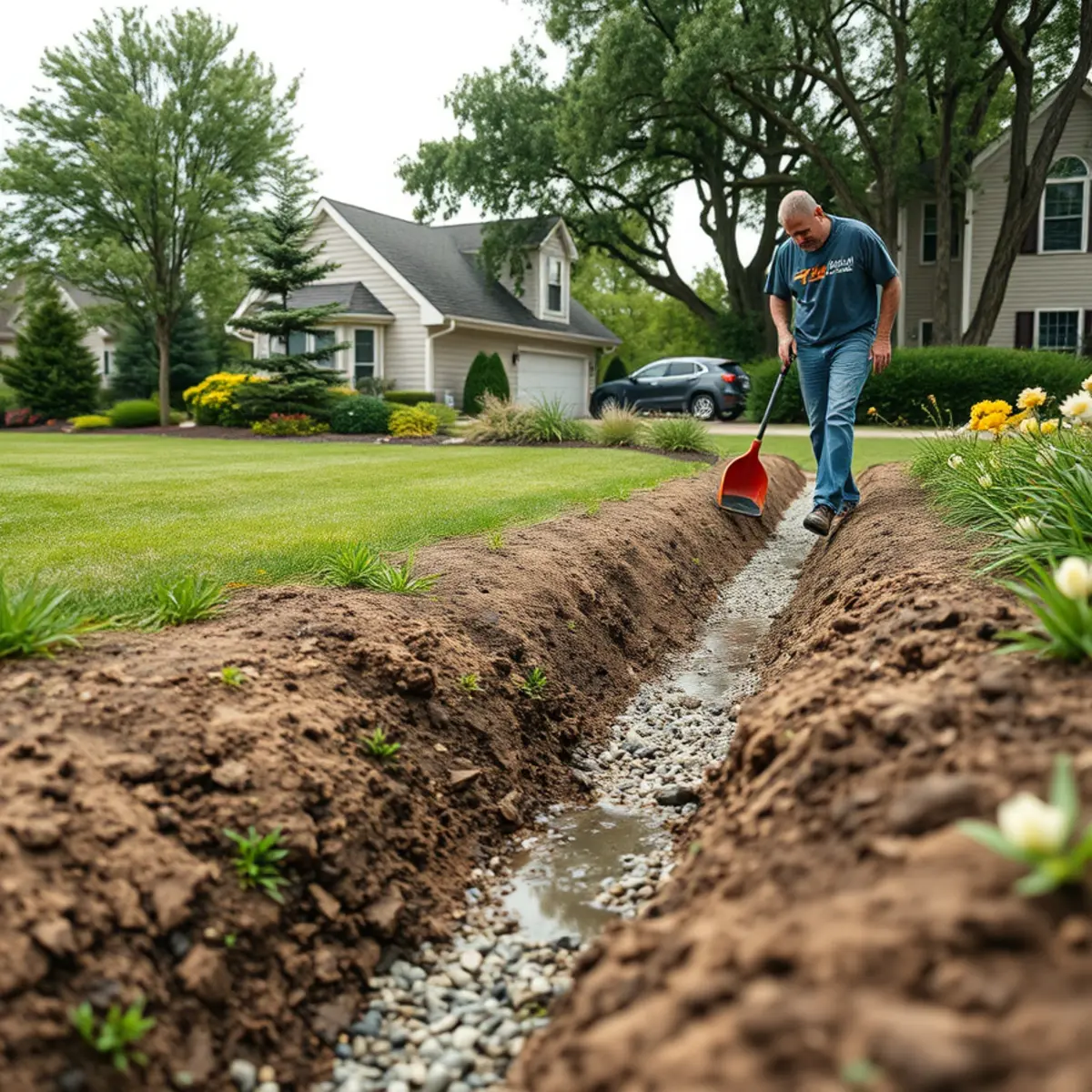
Puddles that linger for days mean water has nowhere to drain. In clay, it will not solve itself — it needs a path out.
Wet basement walls and pooling near the house are urgent. Redirecting that water protects your home's most expensive part.
Grass that stays spongy, grows moss, or dies in patches is telling you the ground underneath stays saturated.
Channels, exposed soil, and mulch that washes away show water moving too fast and unmanaged across the yard.
Standing water breeds mosquitoes. Draining those low areas makes the whole yard more usable in summer.
We assess your slope, soil, and how water actually moves across the property — often after or during a rain — to find the real source, not just the symptom.
We test how fast your soil drains where it matters, so the solution is sized to your actual clay conditions.
We match the solution to the problem: French drains, a dry creek bed, a rain garden, regrading, or a combination.
We install the drainage and set grades to carry water where it should go, then restore the surface with sod, plantings, or stone.
We make sure water moves as intended and leave the area clean and finished, not torn up.
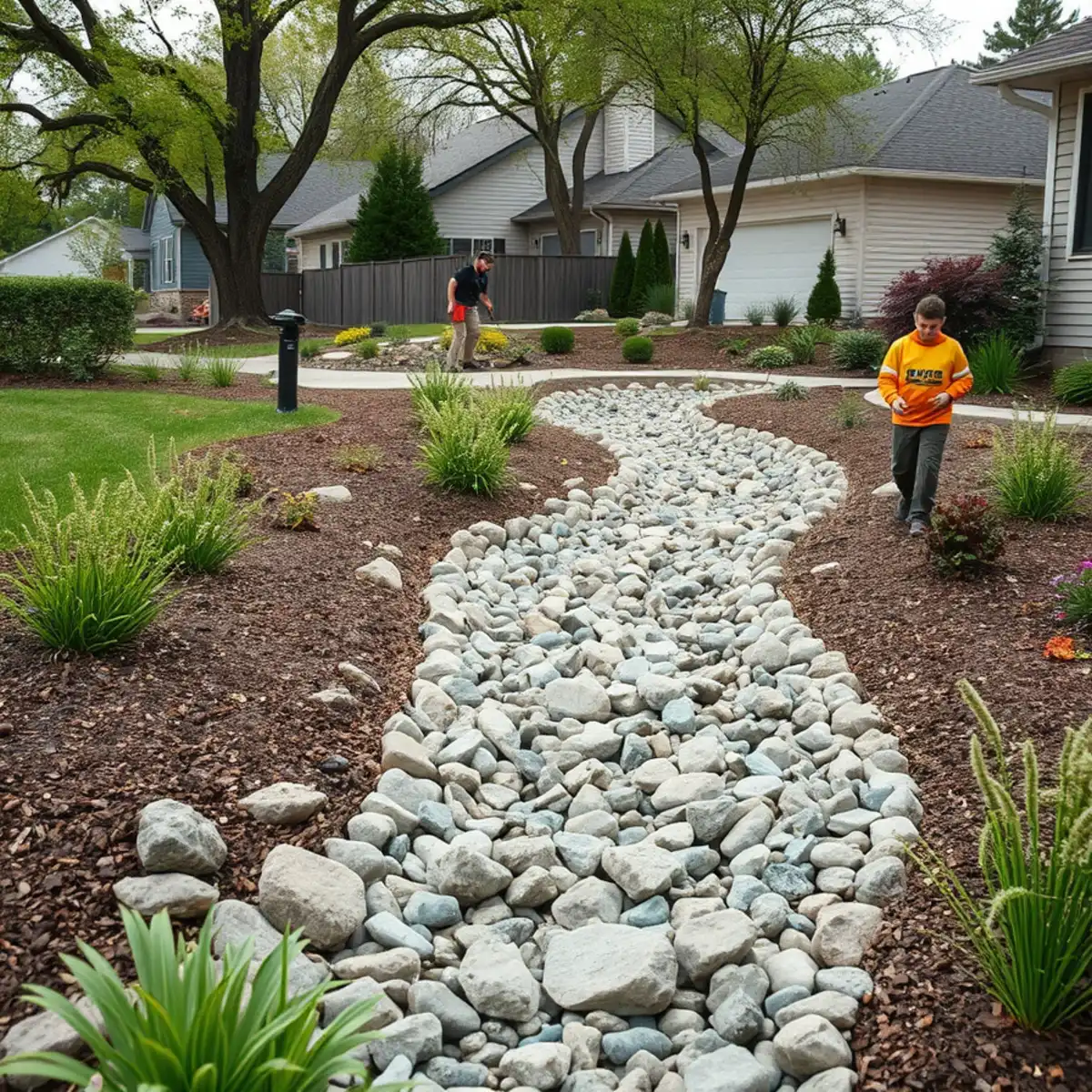
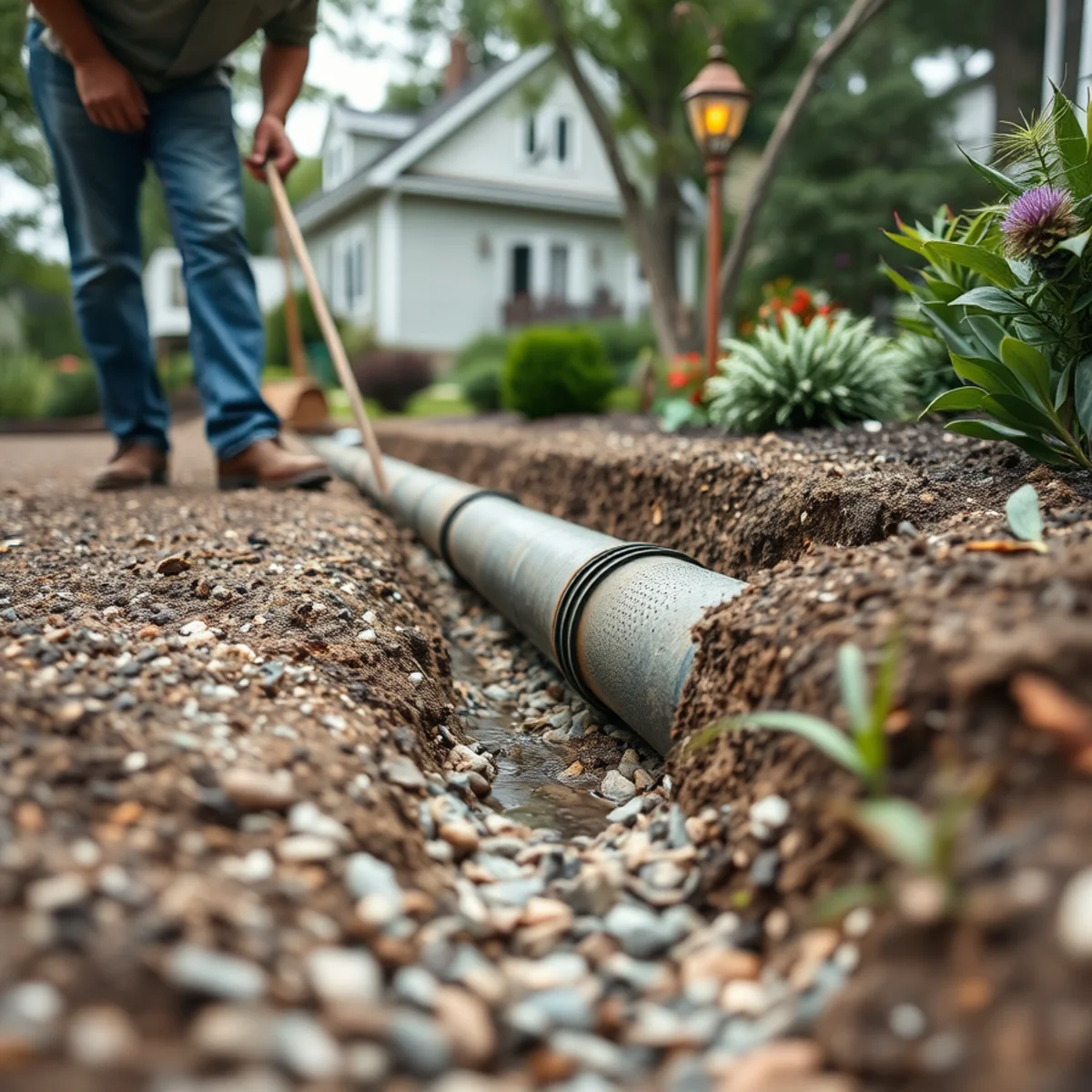
There is no single drainage fix — there is the right fix for your situation, and using the wrong one wastes money. A French drain, a perforated pipe in gravel, intercepts and carries away subsurface and surface water; it is our workhorse for soggy areas and foundation issues. A dry creek bed handles surface runoff while looking like an intentional landscape feature. Regrading reshapes the land so water sheds away from the house on its own.
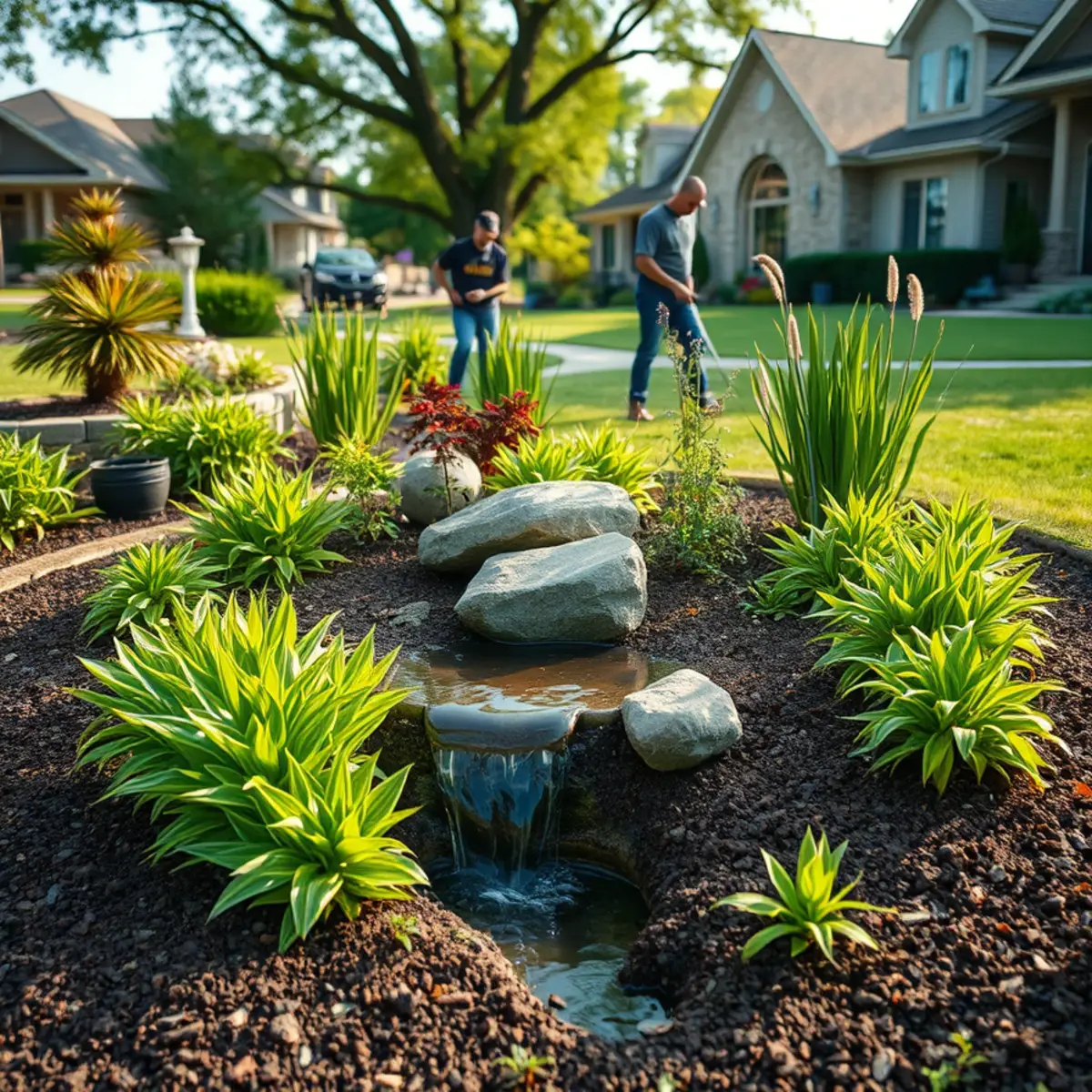
A rain garden is our favorite when it fits: a planted, shallow basin of native, moisture-loving plants that catches snowmelt and runoff and lets it soak in slowly. It turns a drainage liability into a beautiful, low-maintenance feature that helps the watershed instead of dumping water into the street.
Often the best answer combines a few of these. We design the system your yard needs, then build the rest of your landscape on top of solid, dry ground.

Drainage cost depends on the severity of the problem and how much digging and restoration it takes to fix it properly.
A single wet corner is a smaller job than a whole-yard water problem or chronic foundation flooding.
The linear feet of French drain, the size of a dry creek or rain garden, and the depth of digging all factor in.
How much digging is required and how reachable the area is affect the labor and equipment needed.
Putting the yard back — sod, plantings, or stone over the drainage — is part of doing the job right.
We diagnose the water in person and quote the fix in writing. Solving drainage first protects everything else you invest in the yard.
Our soil is heavy clay that drains slowly, and spring snowmelt adds a lot of water fast. That combination causes standing water that damages foundations, kills plantings, and undermines hardscape. Solving it first is what makes everything else last.
A French drain is a perforated pipe in gravel that collects and carries away water underground — ideal for soggy areas and foundations. A dry creek bed handles surface runoff and doubles as a landscape feature. Many yards benefit from both.
In the right spot, yes. A rain garden is a planted basin that captures runoff and snowmelt and lets it soak in slowly. It solves the water problem and adds a beautiful, low-maintenance native planting — one of our favorite solutions.
Almost always. Building patios, walls, or plantings over an unsolved water problem shortens their life. We address drainage first so your investment sits on stable, dry ground.
Engineered retaining walls that terrace slopes, stop erosion, and reclaim usable yard — built to hold through freeze-thaw.
Learn moreA custom, buildable plan for your whole yard — drainage, plantings, and hardscape that fit your property and our climate.
Learn moreNative-forward gardens, trees, and shrubs chosen to survive Zone 5 winters and thrive with less water and upkeep.
Learn more
DrainagePuddles that linger for days after rain or snowmelt are a clay-soil signature in the Fox Cities. Here is how to diagnose the cause and match it to the right fix.
Read article
DrainageA rain garden turns a soggy problem into an asset — capturing runoff, soaking it into the ground, and feeding pollinators. Here is how they work in Fox Cities clay.
Read articleWe provide drainage solutions for homeowners throughout the Fox Valley. Find your community for local details:
Get a free, no-obligation estimate from the owner. Serving Appleton and the Fox Cities for 20+ years.