If your yard holds puddles for days after a rain, or turns to soup every spring when the snow melts, you are not doing anything wrong. You are dealing with Fox Cities clay.
Our soils are heavy with clay, which drains slowly. Add a flat lot, a wet spring snowmelt, and downspouts dumping right against the foundation, and water has nowhere to go. It sits. Over time that standing water kills grass, drowns plant roots, breeds mosquitoes, and works its way toward your basement.
The good news: every one of these problems has a fix. The trick is matching the right solution to the actual cause, which means diagnosing before you dig. We handle drainage across Appleton and the Fox Valley, and the same handful of tools solves most of what we see.
Key Takeaways
- Clay soil plus flat lots and heavy snowmelt is why Fox Cities yards hold water.
- Diagnose first: watch the yard during rain and snowmelt, and run a simple percolation test.
- French drains move water; dry creek beds channel it visibly; regrading redirects it; rain gardens soak it in.
- Fixing where water enters — like disconnected downspouts — is often the cheapest first step.
Why Fox Cities Yards Hold Water
Clay is made of tiny, tightly packed particles. Water cannot move through it quickly the way it moves through sandy soil, so it pools on top or seeps down at a crawl. Most yards here also sit fairly flat, which means water has no natural slope to follow away from the house.
Then comes our spring. A winter's worth of snow melts over a few weeks, often faster than saturated clay can absorb. The result is the standing water homeowners describe every March. Understanding this is step one, because it tells you the fix is rarely just fill dirt in the low spot — that traps the water instead of moving it.
Diagnose Before You Dig
Guessing wastes money. Before choosing a solution, we figure out where water comes from, where it wants to go, and how fast your soil drains.
You can start the same way we do. During the next steady rain, put on boots and watch. Note where water sheets across the surface, where it collects, and how long it lingers after the sky clears. Check whether downspouts and sump discharges are dumping right beside the house.
Then run a percolation test — a simple check of how fast water drains. Dig a hole about a foot deep, fill it with water, let it drain, fill it again, and time how long the second fill takes to empty. Clay that takes many hours to drain tells you the ground itself will not solve the problem; you need to move water somewhere it can leave or soak in. Our drainage solutions team does this assessment as part of every estimate.
French Drains: Moving Water Underground
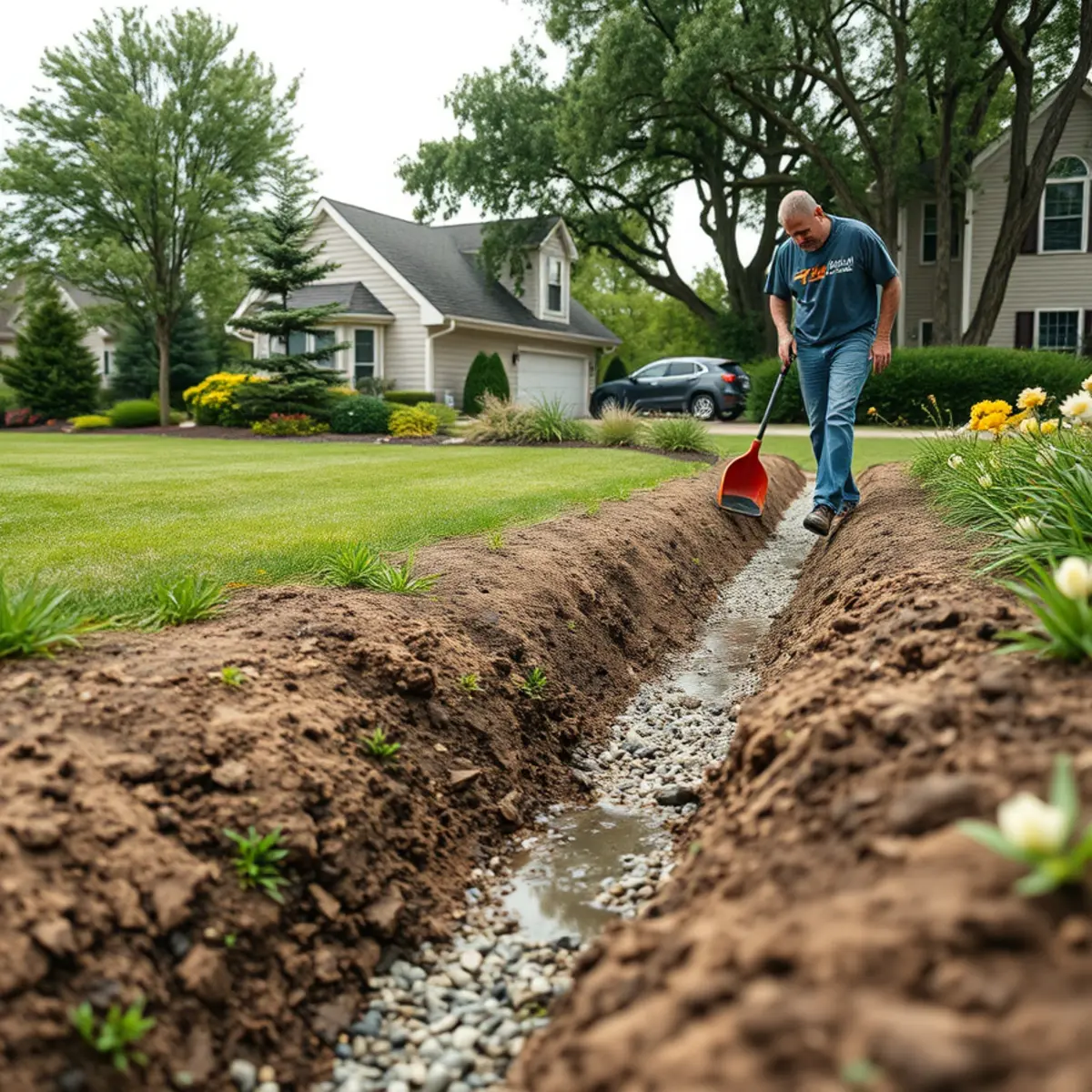
A French drain is a gravel-filled trench with a perforated pipe at the bottom that collects water and carries it away to a lower spot, a dry well, or a daylight outlet. It is the workhorse for chronically soggy areas, water pooling against a foundation, or a persistently wet low corner.
In clay, a French drain earns its keep because it gives water a fast lane out of ground that would otherwise hold it. Placement and slope are everything — the pipe has to fall consistently toward its outlet, and the outlet has to be somewhere water can actually leave. This is where a botched DIY trench often fails: no fall, or nowhere to send the water.
Dry Creek Beds, Regrading, and Rain Gardens
Three more tools, three different jobs
No single fix suits every yard. Often we combine them.
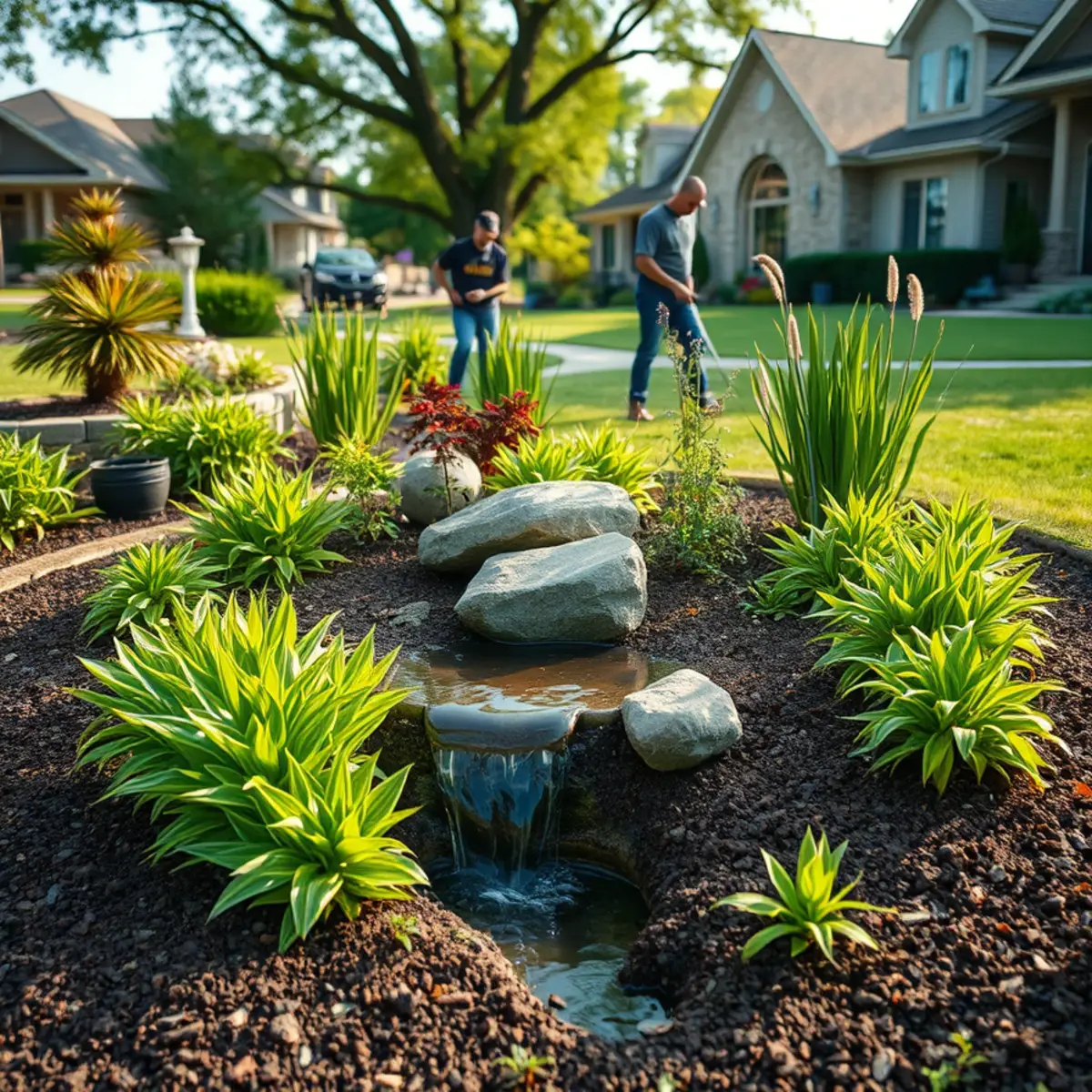
- Dry creek bed: A shallow, stone-lined channel that carries surface runoff visibly across the yard. It handles heavy flows from downspouts, doubles as a landscape feature, and works well on gentle slopes where you want to guide water rather than bury it.
- Regrading: Reshaping the ground so it pitches away from the house and toward a safe outlet. When the root problem is a yard that slopes the wrong way, regrading fixes the cause instead of managing the symptom. It often pairs with retaining walls on sloped lots to hold the new grade.
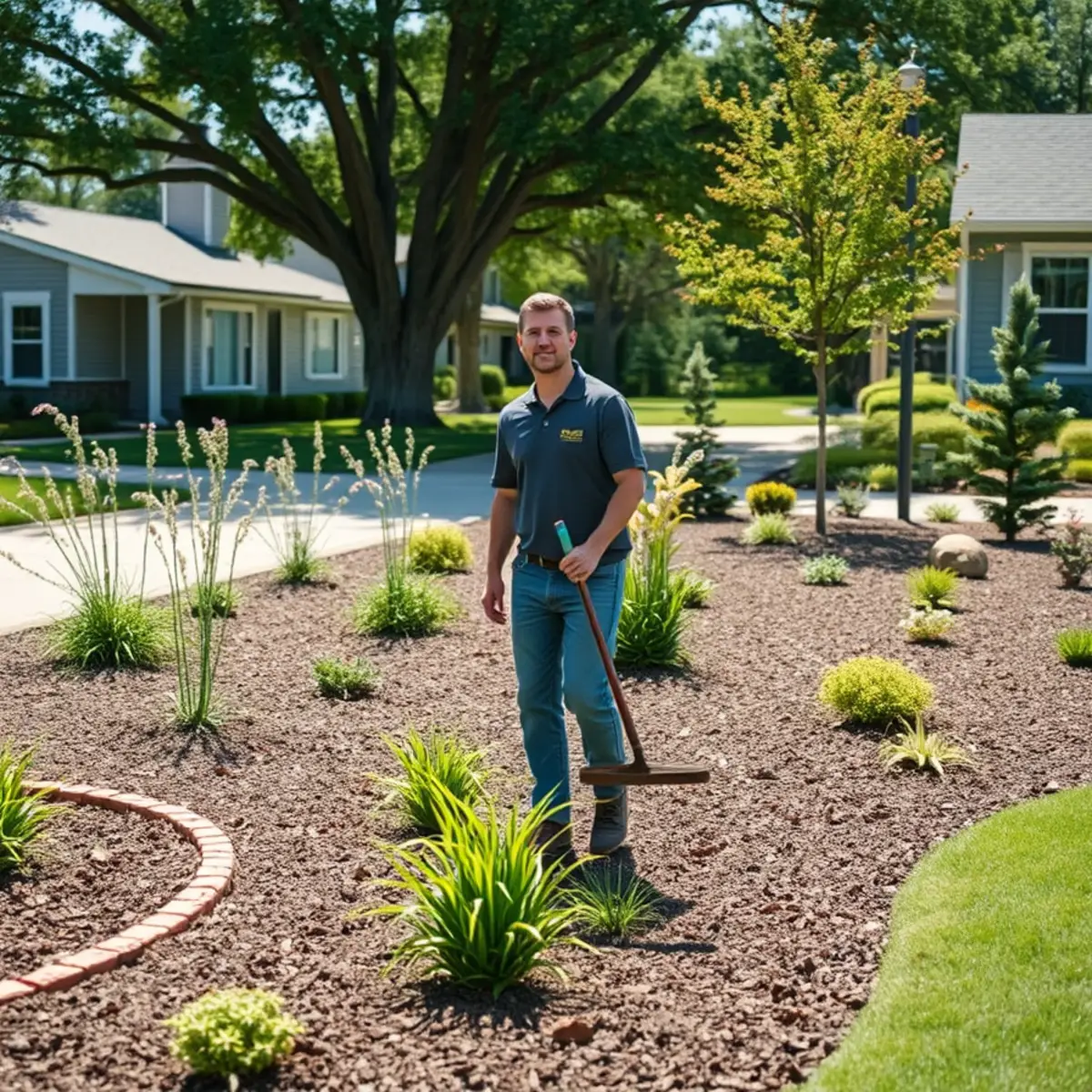
- Rain garden: A shallow, planted basin that captures runoff and lets it soak in slowly, using deep-rooted native plants that tolerate both flooding and dry spells. It is ideal for downspout discharge and low spots, and it turns a drainage headache into habitat.
Start Where Water Enters
Before any trenching, we look at the obvious inputs. Downspouts and sump pumps that discharge right against the foundation cause a surprising share of wet-yard complaints. Extending them well away from the house — sometimes to a dry well or a rain garden — is often the cheapest, highest-impact first move.
From there, the fix follows the diagnosis. A soggy lawn corner might need a French drain. A slope shedding water toward the house might need regrading. Roof runoff might be perfect for a rain garden. Many yards across Appleton and Menasha end up with a combination, sequenced so each piece supports the next. The point is to design the whole path water takes, from where it lands to where it leaves.
Want a hand with your project?
The owner offers free, no-obligation estimates across Appleton and the Fox Cities.
Frequently Asked Questions
Spring snowmelt releases a winter's worth of water over a few weeks, faster than saturated clay can absorb. In summer, rain comes in smaller doses with dry, warm stretches between that let the ground catch up. The soil has not changed — the volume and timing of water has.
Usually not. Filling a low spot in clay often just relocates the puddle or traps water against the fill. The water needs somewhere to drain or soak in. That is why we diagnose the whole flow path before recommending a fix rather than adding dirt.
Yes, and they are one of the most reliable tools we have here, precisely because clay drains so poorly on its own. The keys are consistent slope toward a real outlet and enough gravel around the pipe. A drain with no fall or nowhere to send water is what fails.
For roof runoff and modest low spots, often yes. For large volumes or water pooling against a foundation, a rain garden usually works best paired with regrading or a French drain that delivers water to it. We size and combine solutions based on how much water your yard actually sheds.
Related Services & Areas

Written by the team at Down To Earth Landscaping, an owner-operated landscaping company serving Appleton and the Fox Cities for over 20 years. We design, build, and maintain outdoor spaces built for Wisconsin's climate.