Native plants have a quiet advantage in the Fox Valley: they have already survived thousands of Wisconsin winters. They evolved in our clay, our cold, and our wet springs, so they ask for less and give back more than most of what fills the garden-center racks.
That is not just feel-good gardening. Natives need less water once established, get replaced far less often, and feed the bees, butterflies, and birds that keep a yard alive. Work toward making about a third of your plantings native and you cut your water use, your losses, and your maintenance in one move.
You do not have to turn your yard into a prairie to benefit. Here is why natives work so well here, the ones we reach for most, and how to use them without the landscape looking untamed.
Key Takeaways
- Natives are adapted to Fox Valley clay and cold, so they need less water and get replaced less often.
- Aiming for roughly a third native plantings lowers cost and supports pollinators.
- Deep-rooted natives are ideal for rain gardens and wet, slow-draining spots.
- Designed with structure and repetition, native beds read as intentional, not wild.
Why Natives Make Sense Here
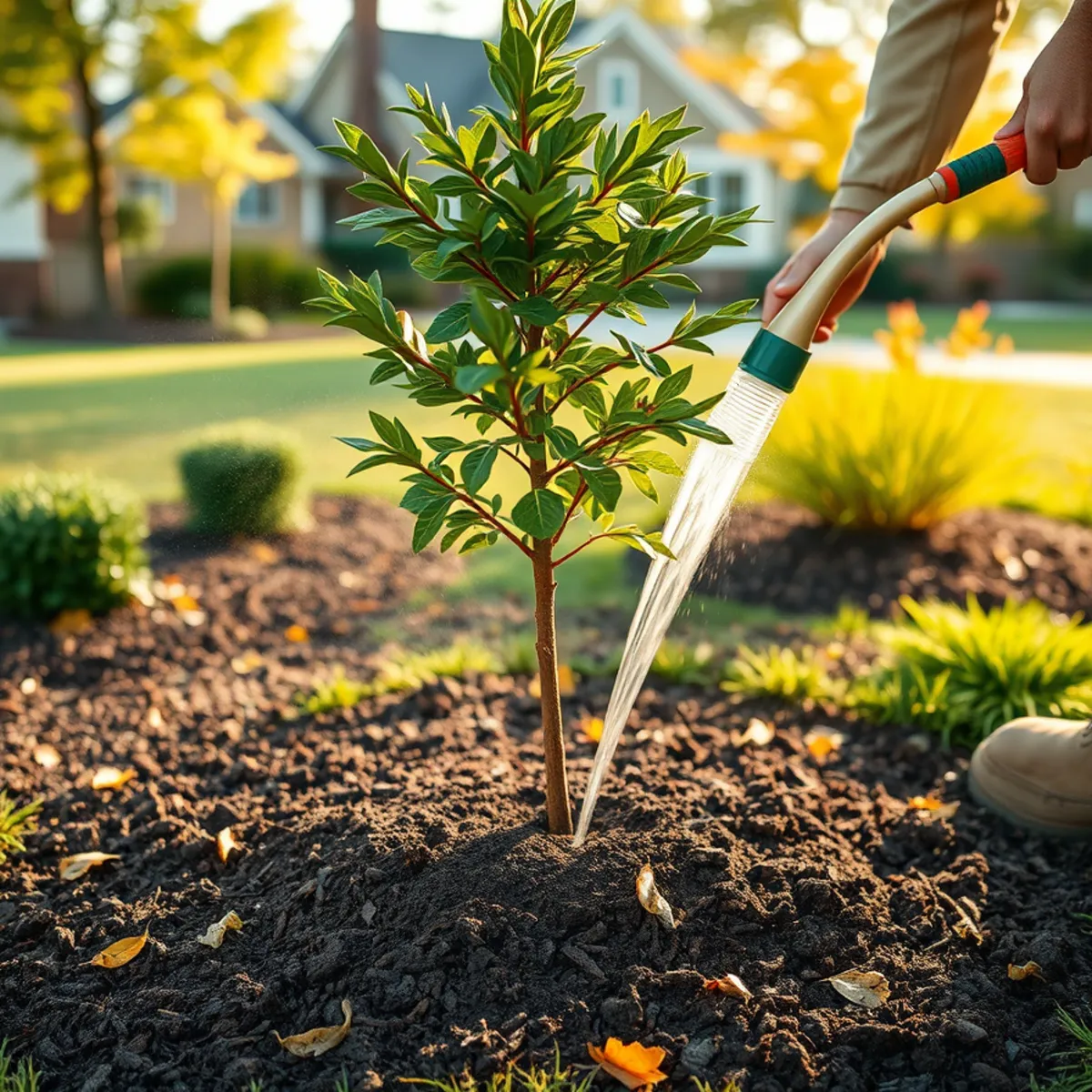
A plant native to Wisconsin spent millennia adapting to exactly the conditions your yard throws at it: heavy clay, -20°F winters, soggy springs, and dry August stretches. That history shows up as deep roots, cold tolerance, and drought resistance you cannot buy in a tender ornamental.
The practical payoff is lower cost over time. Established natives rarely need supplemental watering, resist local pests, and come back reliably year after year — which means fewer replacements. They are the backbone of a resilient planting and softscaping plan precisely because they do not fight the site.
Top Native Picks for Fox Valley Yards
These are the natives we plant most across the Fox Cities. All are hardy well beyond our winters and forgiving of clay.
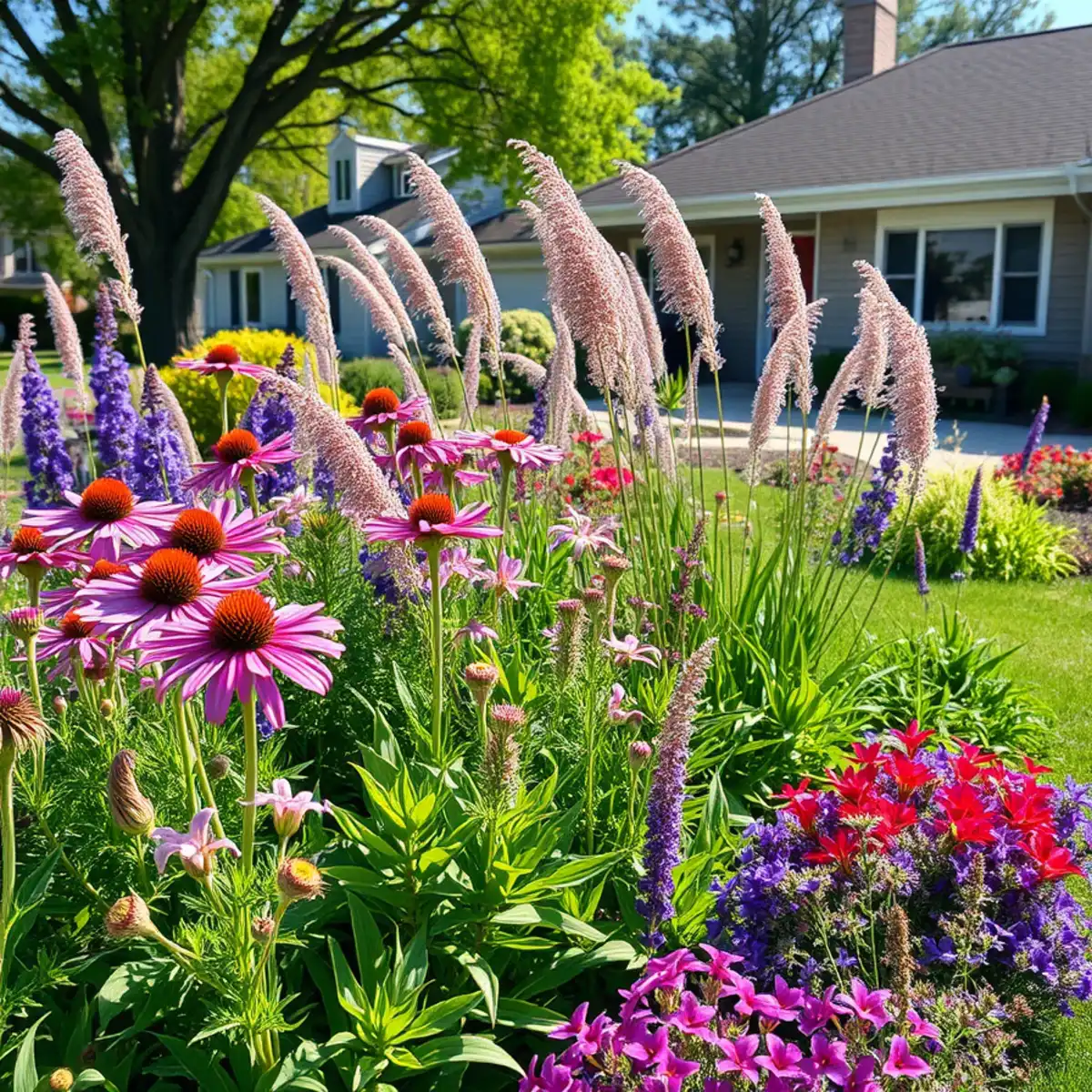
- Purple coneflower and black-eyed Susan: Long-blooming, drought-tough, and endlessly attractive to pollinators. Their seed heads feed birds into winter.
- Wild bergamot (bee balm): Fragrant lavender flowers that bees and hummingbirds swarm.
- Little bluestem and switchgrass: Native grasses that add movement, fall color, and winter structure while shrugging off clay.
- Serviceberry and nannyberry: Native shrubs with spring flowers, wildlife berries, and strong fall color.
- Native ferns: The answer for damp, shady spots where turf and sun-lovers sulk.
Natives for Pollinators
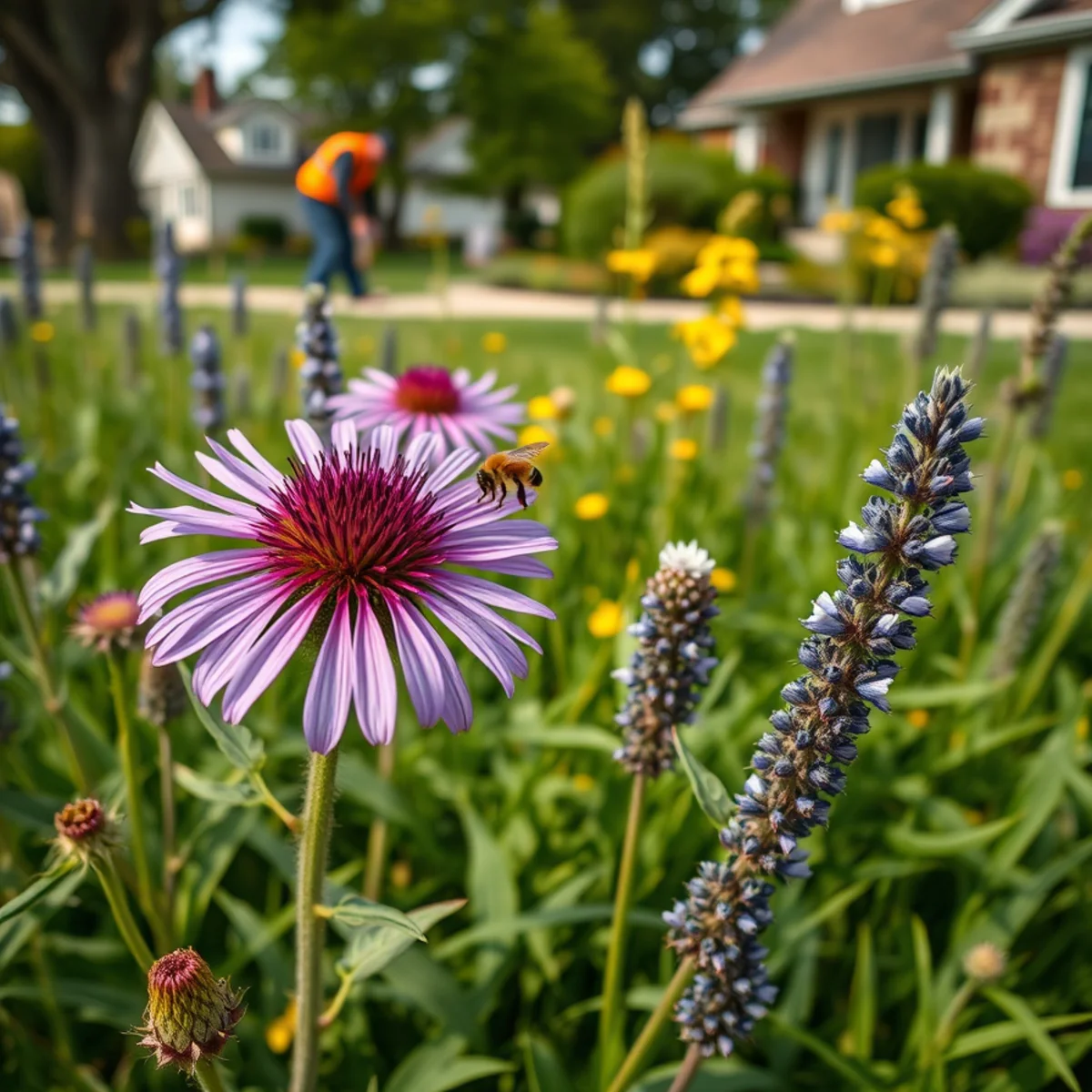
If you want a yard buzzing with bees and dancing with butterflies, natives are how you get there. Local pollinators evolved alongside these plants and often depend on them specifically — some native bees only work certain native blooms.
The trick is a succession of bloom. Plant so something is flowering from spring through fall, and you feed pollinators across their whole active season. Pair early bloomers with midsummer coneflower and bergamot, then late-season asters and goldenrod. Cluster the same plant in groups of three or five rather than dotting singles around — pollinators find and work masses of color far more efficiently. This is the kind of intention we build into a landscape design so the garden works for wildlife and still reads as designed.
Natives in Rain Gardens
Natives and drainage problems are a natural match. A rain garden — a shallow planted basin that catches runoff and lets it soak in — depends on plants that can handle both flooding after a storm and dry spells between them. Few plants do that. Deep-rooted natives do it easily.
Their long roots also open up our tight clay, helping water infiltrate where it would otherwise pool. Swamp milkweed, blue flag iris, cardinal flower, and switchgrass all thrive in the wet center of a rain garden, with coneflower and black-eyed Susan on the drier edges. That is why our drainage solutions so often include native plantings — they turn a wet, useless corner into habitat that manages stormwater for free.
Designing So Natives Look Intentional
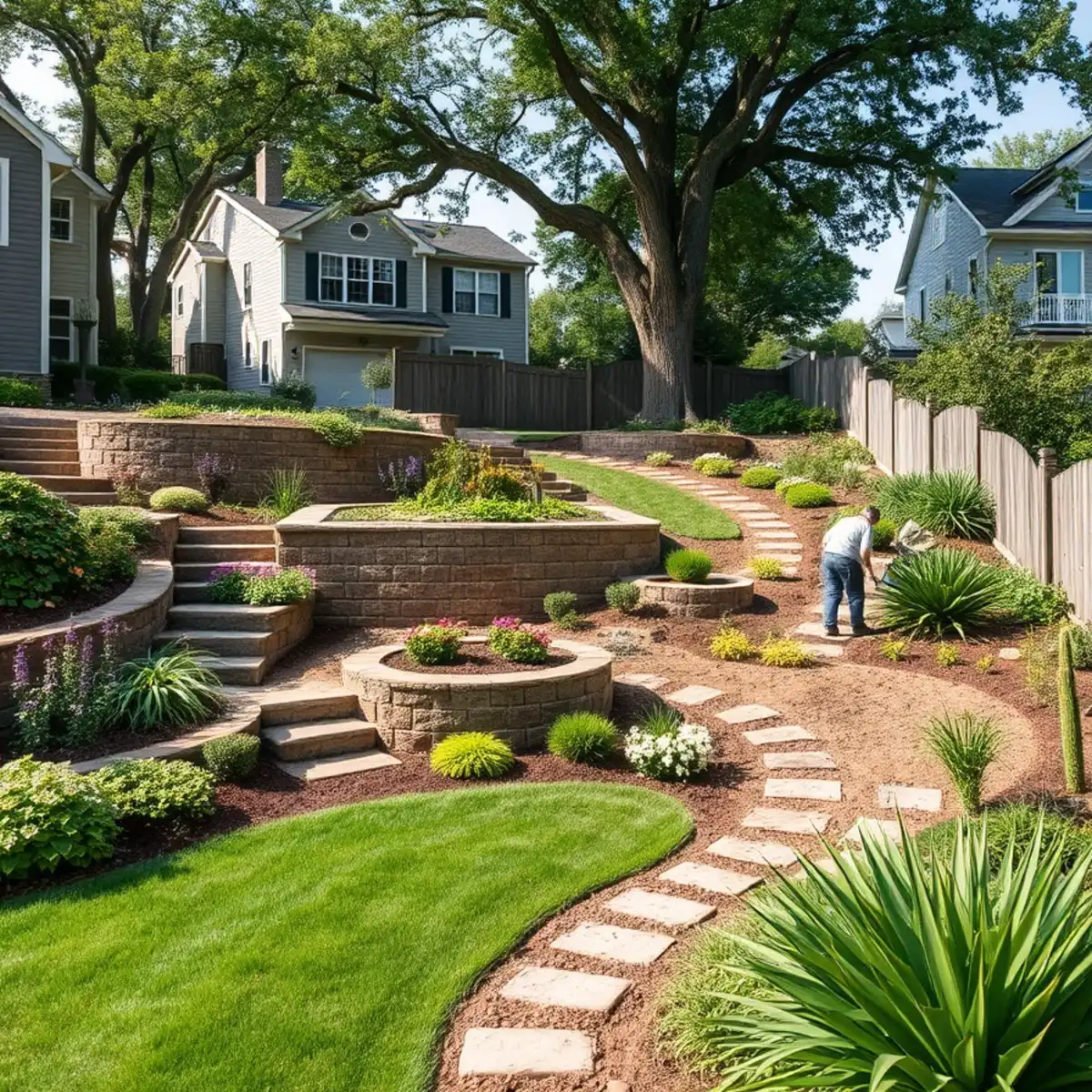
The old knock on native gardens is that they look messy. They do not have to. The difference is design. Repeat plants in drifts, give beds a clean mowed or hardscaped edge, and mix in structure so the eye reads order.
Keep some traditional shapes too — a tidy edge, a defined bed line, a few evergreen anchors — and native perennials fill in as the living, moving part. Homeowners across Appleton and Oshkosh are surprised how polished a native planting looks when it is composed rather than scattered. You get the ecological upside and the curb appeal at the same time.
Want a hand with your project?
The owner offers free, no-obligation estimates across Appleton and the Fox Cities.
Frequently Asked Questions
Once established, yes. Wisconsin natives evolved to handle our wet springs and dry late summers, and their deep roots reach moisture shallow-rooted ornamentals can't. They still need regular watering the first season to establish, but after that most thrive on rainfall alone in a normal year.
Not if it's designed. Repeating plants in drifts, keeping a clean bed edge, and adding structural anchors makes a native planting read as intentional. The wild look comes from scattering singles with no framework. With composition, you get pollinator benefits and curb appeal together.
Deep-rooted natives that tolerate both flooding and drought — swamp milkweed, blue flag iris, cardinal flower, switchgrass, and red-twig dogwood. They're the backbone of a rain garden, handling standing water after a storm and dry spells between while helping water soak into heavy clay.
A practical target is roughly a third of your plantings. That's enough to meaningfully lower water use, reduce replacements, and support pollinators, while still leaving room for ornamentals you love. You can lean heavier on natives in rain gardens and naturalized areas.
Related Services & Areas

Written by the team at Down To Earth Landscaping, an owner-operated landscaping company serving Appleton and the Fox Cities for over 20 years. We design, build, and maintain outdoor spaces built for Wisconsin's climate.