Most Appleton homeowners reach for the shovel in May. It feels right — the weather warms up, the garden centers fill their lots, and everyone is itching to get outside. But if you want trees and shrubs that settle in fast and shrug off their first Wisconsin winter, early fall is the better bet.
Here is the logic. In September the soil is still warm from summer, while the air has cooled off. Warm soil keeps roots growing; cool air slows down the leaves. A young plant can pour its energy into roots instead of fighting to keep foliage alive in the heat. By the time spring arrives, that root system is already established and ready to push new growth.
We have planted in every month the ground allows across the Fox Valley, and the pattern holds year after year. Below is the calendar we follow, plus how to keep a new tree from going into shock — and why watering, not cold, usually decides whether a fall planting makes it.
Key Takeaways
- Early fall, roughly September, is the top window to plant trees and shrubs in Appleton; spring after mid-May is a solid second.
- Warm soil and cool air in fall push root growth without stressing the leaves.
- Keep watering deeply until the ground freezes — dry roots kill more fall plantings than cold does.
- Skip planting in the July heat or in the last week or two before the late-September frost.
Why Fall Planting Wins Here
Wisconsin sits in USDA hardiness zone 5a to 5b. The hardiness zone is just shorthand for how much winter cold an area normally gets — ours drops to around -15 to -20°F in a typical winter. A tree planted in spring has only a few months of root growth before it faces summer heat and dry spells. A tree planted in early fall gets those same cool, moist autumn months, then a full spring before its first real test.
Roots keep growing in our soil until it drops below about 40°F, which usually means well into November. That gives a September planting two solid months of underground establishment while the top of the plant goes dormant and asks for almost nothing. Our planting and softscaping crews schedule the bulk of tree and shrub installs for this stretch for exactly that reason.
Spring is our second choice, and a good one — just wait until after the average last frost around mid-May so tender new growth is not caught by a late cold snap.
The Appleton Planting Calendar
Month by month through the usable season
Here is the rough schedule we plan around across Appleton and the surrounding Fox Cities. Weather shifts it a week or two each year, but the shape stays the same.
- Mid-May to mid-June: Second-best window. Plant after the last frost and water faithfully through summer.
- July to mid-August: Least favorable. Heat and dry spells stress new plants; hold off unless you can water constantly.
- Late August to early October: The prime window. Warm soil, cool air, and reliable rain.
- Mid- to late October: Still workable for hardy, balled-and-burlapped stock, but time is running short.
- November onward: Stop once the ground begins to freeze — roots can no longer establish.
Beating Transplant Shock
Transplant shock is the slump a plant goes through when it moves from a pot or nursery row into your yard. Roots get disturbed, and the plant spends its first weeks recovering instead of growing. You cannot avoid it entirely, but you can keep it short.
- Dig the hole two to three times as wide as the root ball, but no deeper than the ball itself — planting too deep suffocates roots.
- Loosen circling roots on potted stock so they grow outward instead of strangling the trunk.
- Backfill with the native soil you dug out, not bagged potting mix; roots need to adapt to the clay they will actually live in.
- Mulch with about 3 inches of shredded hardwood, kept a few inches back from the trunk — never piled against the bark.
- Skip fertilizer at planting. Feeding pushes top growth the roots cannot yet support.
Watering-In Before the Freeze
This is the step that decides most fall plantings, and the one homeowners skip. Cold rarely kills a hardy tree here. Dry roots do. Evergreens especially keep losing moisture through their needles all winter, and if they go into the freeze thirsty, they brown out by March.
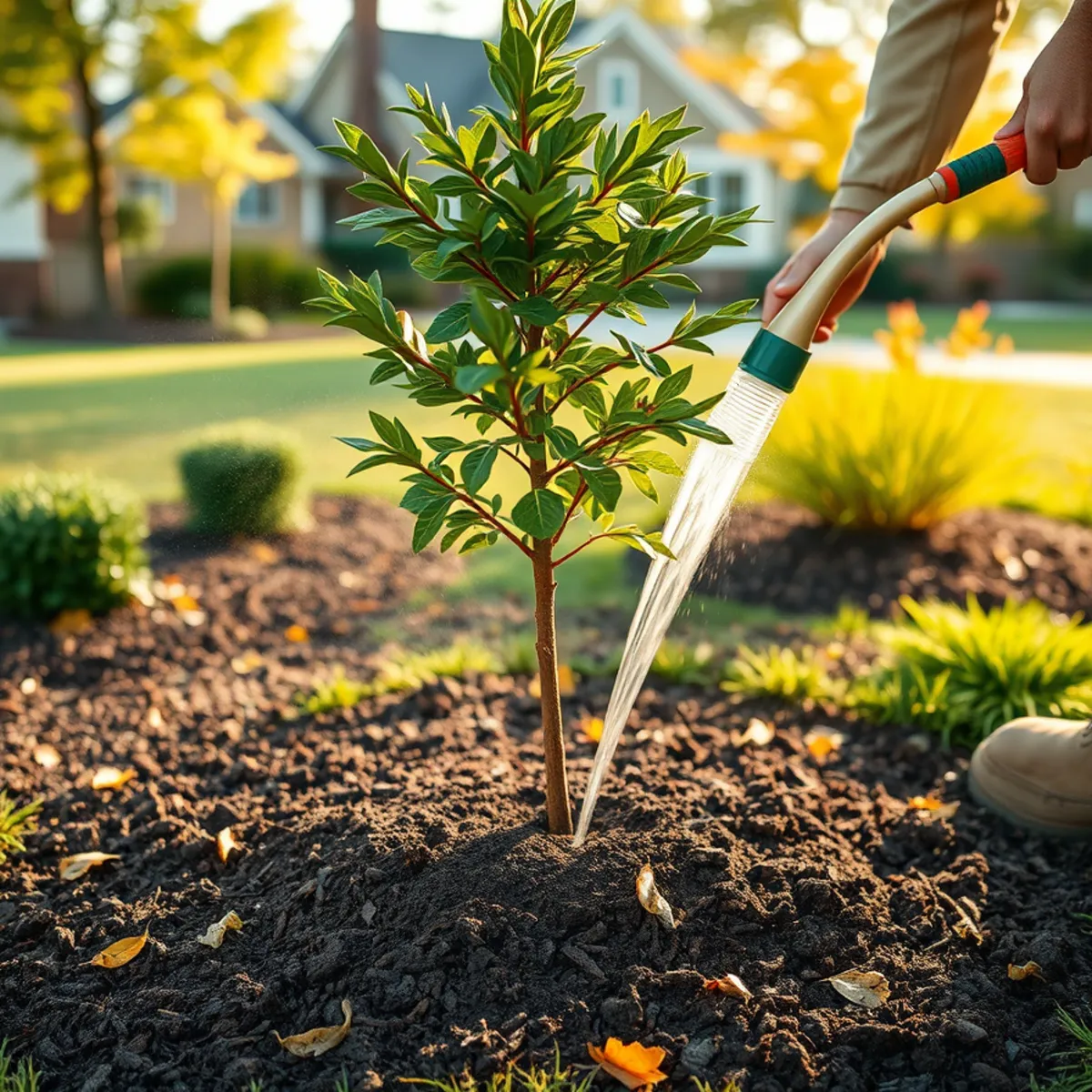
Water deeply once or twice a week from planting until the ground freezes, usually late November. Deep and infrequent beats a daily sprinkle — you want moisture down where the roots are, not just at the surface. A slow trickle from a hose for twenty minutes at the base does more than any quick spray.
Right before the freeze, give everything one long, final soaking. That reservoir of moisture carries roots through the dormant months. If you have an in-ground system, plan your seasonal cleanup and shutdown around this — get the last deep watering in before the blowout, not after.
What to Plant, and What Should Wait for Spring
Most trees and shrubs that belong in a Fox Valley yard take well to fall planting: serviceberry, nannyberry, maples, oaks, viburnums, dogwoods, and hardy evergreens like white spruce and arborvitae. Balled-and-burlapped and container stock both work.
A few things do better waiting for spring. Broadleaf evergreens like boxwood, marginally hardy plants at the edge of our zone, and anything shallow-rooted can struggle if planted too late, because they have not anchored before the ground starts heaving. Bare-root stock is also a spring job. If you are unsure where a plant falls, we fold those calls into a full landscape design plan so the schedule matches the plant.
Homeowners across Appleton and nearby Neenah often ask us to phase big plantings across a fall and the following spring, and that is frequently the smartest path — get the hardy anchors in now, hold the tender specimens for May.
Want a hand with your project?
The owner offers free, no-obligation estimates across Appleton and the Fox Cities.
Frequently Asked Questions
Early October is usually fine for hardy, established stock, especially balled-and-burlapped trees. The deeper into the month you go, the more you are gambling on the ground staying open long enough for roots to settle. Once the soil starts to freeze, wait for spring.
You can, but it is the hardest season to succeed in. Heat and dry spells push new plants hard, and one missed week of watering can undo them. If you must plant in July or August, commit to deep watering several times a week and mulch heavily to hold moisture.
No. Hold off on fertilizer at planting time — it pushes leafy top growth before the roots can support it. Focus on consistent watering the first year. You can start a light feeding program the following spring once the plant is established.
Deeply once or twice a week until the ground freezes, then one long final soaking. Aim to wet the soil down to the root ball rather than just the surface. Evergreens especially need to go into winter fully hydrated or they brown out by spring.
Related Services & Areas

Written by the team at Down To Earth Landscaping, an owner-operated landscaping company serving Appleton and the Fox Cities for over 20 years. We design, build, and maintain outdoor spaces built for Wisconsin's climate.