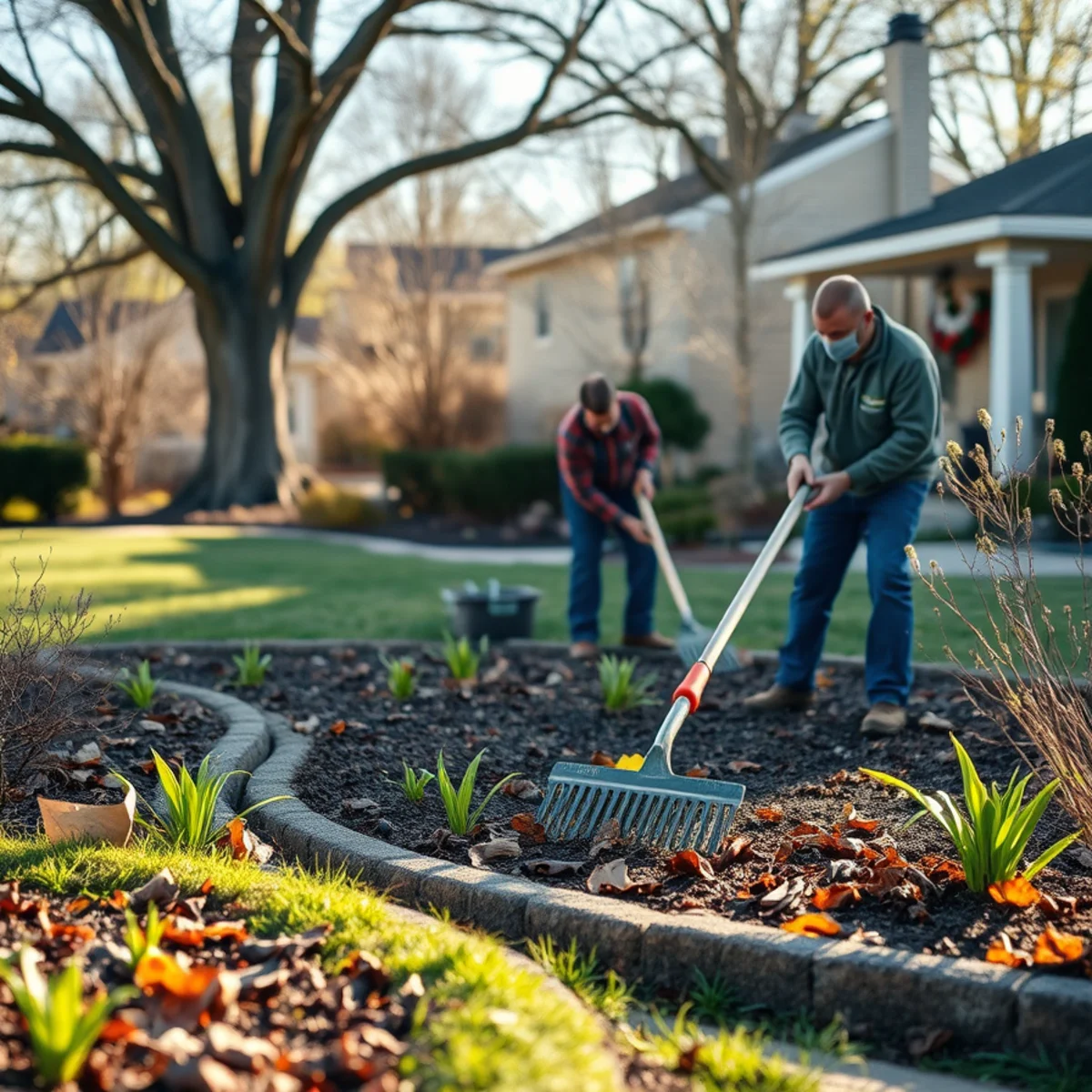
Of all the fall landscape tasks, the irrigation blowout is the one you cannot skip without paying for it. Leave water in your sprinkler system over a Wisconsin winter and it freezes, expands, and cracks pipes, valves, and fittings. Come spring, you are looking at repairs that cost far more than the blowout would have.
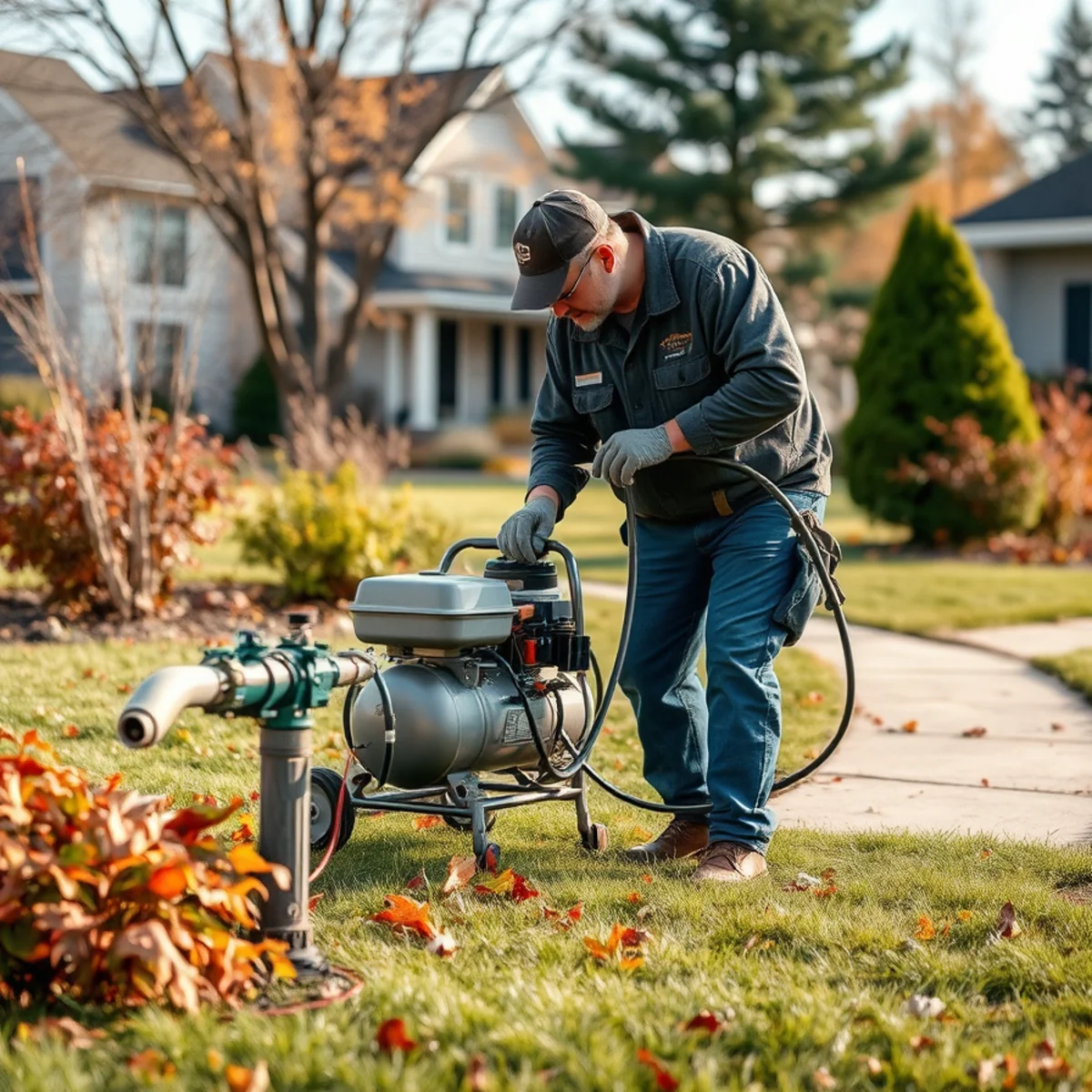
A blowout is straightforward: compressed air pushes every drop of water out of the underground lines before the ground freezes. Simple in concept, but the timing and the process both matter more than people expect.
Here is when to get it done in our climate, exactly what winter does to a system that keeps its water, and how a proper blowout works.
Key Takeaways
- Schedule your blowout by mid-October, before the first hard freeze reaches the buried lines.
- Water left in the system freezes and cracks pipes, valves, and the backflow preventer.
- A blowout uses compressed air to clear every zone — it is not the same as just shutting off the water.
- Backflow devices and manifolds are the most expensive parts to replace, and the most vulnerable.
What a Blowout Is and Why It Matters
An in-ground irrigation system is a web of buried pipes, valves, and sprinkler heads that stays full of water all season. Draining it by gravity does not clear the low spots and the heads — water always remains. A blowout forces compressed air through each zone to push that leftover water out through the sprinkler heads until the lines run dry.
It matters because water expands when it freezes. Trapped in a rigid pipe or a valve, that expansion has nowhere to go but out, splitting the component open. The damage is hidden until spring startup, when zones fail to pressurize or geysers erupt from cracked lines. Folding the blowout into your fall lawn care and maintenance routine is the reliable way to make sure it happens on time.
When to Schedule It in Wisconsin
The target is mid-October. You want the blowout done after you are truly finished watering for the season but comfortably before the first hard freeze, which can reach shallow-buried lines earlier than people assume.
In the Fox Cities, waiting until you feel the first real cold snap is cutting it close. Frost can arrive in late September, and a hard freeze is not far behind. Booking too late is a genuine risk, because everyone with a system needs the same service in the same narrow window, and providers fill up fast. Scheduling in September for an early- to mid-October slot is the safe play. This dovetails naturally with the rest of your seasonal cleanup, so the whole system gets put to bed at once.
What Happens If You Skip It
A skipped blowout is one of the more expensive lessons in yard care. Here is the chain of damage a freeze sets off in a system that kept its water.
- Cracked underground pipes, which mean digging up the yard to find and repair the splits.
- Split valves and manifolds that no longer hold or direct pressure.
- A ruptured backflow preventer — the assembly that keeps irrigation water from flowing back into your drinking water — which is often the priciest single component.
- Damaged sprinkler heads that spray erratically or not at all.
- A spring startup that turns into a repair project instead of a five-minute reactivation.
How the Process Works
A proper blowout is methodical. The water supply to the system is shut off first. An air compressor sized to the system connects at the appropriate point, and each zone is run one at a time so the air pushes water out through that zone's heads until they blow dry.
Doing it zone by zone matters — sending too much air pressure through the whole system at once, or running a zone dry too long, can damage heads and fittings. The backflow preventer gets special attention, since it is both vulnerable and expensive. A good technician knows the right pressure and sequence for your particular setup, which is a big part of why this is worth having done right.
DIY or Call a Pro
Homeowners with the right size compressor and some know-how can blow out a simple system. The catch is the compressor: most shop compressors do not move enough air volume to clear the lines properly, and too much pressure cracks fittings and heads. It is easy to think a system is clear when water still sits in the low spots.
Given what is at stake — buried pipes and a backflow assembly that costs real money to replace — many homeowners across Appleton and Green Bay simply have it handled as part of closing down the yard for winter. Done right, once, it protects a system worth far more than the service. Done wrong or skipped, it is the repair bill that shows up in April.
Want a hand with your project?
The owner offers free, no-obligation estimates across Appleton and the Fox Cities.
Frequently Asked Questions
By mid-October. You want it done after you're finished watering for the season but before the first hard freeze, which can reach shallow lines earlier than expected. Book in September, since everyone needs the service in the same narrow window and providers fill up quickly.
No. Shutting off the supply leaves water sitting in the low spots, valves, and heads. Gravity draining doesn't clear it either. Only compressed air pushes every drop out. That leftover water is exactly what freezes, expands, and cracks the system over winter.
Usually the backflow preventer — the assembly that keeps irrigation water out of your drinking supply. It's both vulnerable to freezing and costly to replace. Cracked underground pipes are also expensive because they require digging up the yard to reach and repair.
Sometimes, on a simple system, if your compressor moves enough air volume. Most shop compressors don't, and too much pressure cracks fittings and heads while too little leaves water behind. Given the cost of the damage, many homeowners have it done as part of winterizing the yard.
Related Services & Areas
Services

Written by the team at Down To Earth Landscaping, an owner-operated landscaping company serving Appleton and the Fox Cities for over 20 years. We design, build, and maintain outdoor spaces built for Wisconsin's climate.